

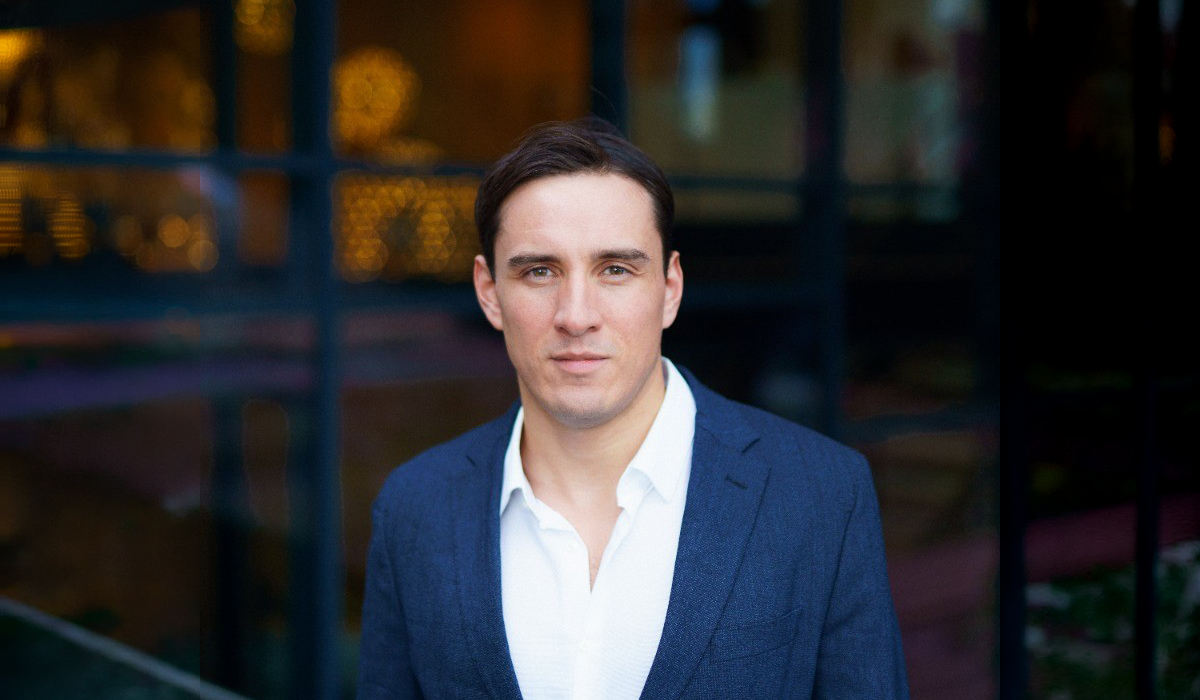
03 Sep Interview with Juan Santizo, PMO of AINCO Group
Let’s start by introducing the company to readers in South Florida who don’t know it yet. What is AINCO’s vision, and where do you want to take the company, both in Guatemala and beyond?
AINCO is a company that has been building for more than fifty years and is well positioned in Guatemala. Our vision is to raise the standard of the industry in the country and to support all of our clients and stakeholders, because in the end we are just one more link in the supply chain. There is a great deal of collaboration among the different players: the companies that supply the steel, the cement, the fuel for the asphalt… When you work within that ecosystem, you realize just how connected we all are.
The idea is to shift the perspective a bit: to move from competition to collaboration and to work together as an industry so we can be more productive. It’s about developing the country jointly and to the benefit of all parties.
The construction sector is growing very strongly in Guatemala and is projected to expand at an annual rate of 8 to 9 percent through 2030. What is driving that growth, and where do you see the biggest opportunities today?
I’ve read quite a bit about it, and although I’m no expert, there’s one thing you don’t need to study because it’s plain to see: the country’s demographic dividend. There are so many young people. The average age in Guatemala is around twenty, which means a good portion of the population is even younger than I am. And all those people need to eat, study, work and have housing.
As has happened in every country that has developed, I believe the most important factor in Guatemala right now is our demographic dividend. We are a very young country, people want to study and want to work, and that represents an opportunity both for Guatemalans and for foreign investors, because it’s an expanding economy for the simple reason that people are young and have their whole lives ahead of them.
There’s a second element that goes hand in hand with this and is worth mentioning: the development of recent years has created a snowball effect. The economy becomes more and more attractive because there is more purchasing power. You go to Guatemala and you find luxury apartments like the ones you see in Miami. What I mean is that today an investor can come in and sell practically any type of product: there’s a market for the A+ segment and also for mass consumption. That didn’t exist before, and now it does. Guatemala City is an enormous city, and to a certain extent we’ve already become a metropolis. On top of that, developments in the interior of the country are also starting to take off, which creates a huge opportunity in logistics, in housing and, really, in almost everything.
Speaking of opportunities, which recent projects would you highlight, particularly in the area of public-private partnerships, and what do those projects say about the company’s capabilities in the market?
When it comes to PPPs, there’s only one project in Guatemala, and it’s the first one we’ve just managed to get off the ground as a country. We faced many challenges to make it happen, and there have been several reforms to the law on partnerships for the development of economic infrastructure. The fact that even one exists already seems to me a big step and a major milestone, because once the first one goes through, the players gain confidence and more can be done.
That said, PPP projects can be good or bad: in the end it depends on the officials and the private sector structuring them in a way that benefits the country. We’re at a crossroads. If the project is structured well, the project succeeds; if it’s structured badly, it fails. And we could lose the chance to use that tool to develop infrastructure simply because there was one bad example. The concept has been proven in other countries and has shown itself to be a way of developing nations with a good cost-benefit ratio for public money, which sometimes isn’t enough, or simply as an alternative.
On that front, AINCO was involved in a project of this kind: a very important highway that connects the port’s access route with the rest of the country. A country’s joints are essentially the same analogy as the joints in our body: they’re where the blood flows through. I think that’s why it was chosen as the first project, because if we get the country’s blood flowing, everything else follows. There’s a lot of potential in this type of initiative, and let’s hope they become more and more successful.
Is that an AINCO project?
We’re part of it, but the concession is held by a Mexican consortium that we’ve worked for.
Staying with the idea of blood and infrastructure: we recently interviewed the rail sector about the possibility of bringing back the train in Guatemala. How is that project going?
The train already exists; the thing is they’re now remodeling it and we hope they’ll reactivate it. That line was built by the United Fruit Company a very long time ago. Guatemala had a train that worked and that we used to move product, but it stopped being maintained and a lot of people went to live along the area where the tracks ran, because it was left as free land, so to speak. That has been one of the big challenges in reactivating it: there are people living there.
Technology is changing the way we build. How is AINCO incorporating tools like BIM and more modern methodologies into its projects?
I’m personally very tech-oriented, and at AINCO we went through a digital transformation about ten years ago. Today we look at almost everything digitally. BIM (Building Information Modeling), in the end, is information—that’s what the “I” stands for. And the most important thing about technology, I believe, is precisely the information.
By transforming our processes, we’ve been able to capture data we never would have had at hand before, and with it we’ve been able to create intelligence that lets us be far more precise on costs, on timelines and on the clarity of projects. Having a common data environment with all the information in the cloud also allows us to collaborate much better among all the players involved. That has been a game changer too, because construction is, in essence, about coordinating as well as possible with everyone involved. If the information is clear, everyone knows what they have to do, how, and to what extent. That’s where technology truly becomes an enabler of greater productivity.
Now, with artificial intelligence, we’re looking at how to put all that information to use. When we started the digital transformation ten years ago, artificial intelligence didn’t exist, and we never imagined that everything we were storing would end up feeding a model, or that a model would come along capable of learning from that information and helping us create agents that support us today. On that front I think we’re in pretty good shape. Obviously there are generational differences and there’s always some resistance to change, but we’re all moving toward something more digital. That said, it’s also good to keep a bit of the analog, because the two complement each other.
Sustainability is now a central pillar of infrastructure. How are you integrating it into your projects, and what impact will it have on the future of the sector?
I have international experience, especially in Scandinavia, and I learned a lot about this subject there. In Norway and Denmark, sustainability is practically the only thing people talk about in construction; that and occupational safety are the two topics present at every event. That changed my mindset.
In Europe, a new carbon-footprint standard is now being created, which means the impact of everything that gets built is already being measured so the entire supply chain can be quantified and capped. And that’s made possible precisely by what I was explaining earlier: information. When you have a digital model with the right data and you link it to sustainability, you can see directly in the model, for example, which version of a door is more sustainable than another. That way you make your purchases of materials and resources with the project’s sustainability in mind too, and you can see it before you even start building. In Scandinavia that transition is underway: every company is getting ready to meet the new standard, and a lot of software is being developed to measure that sustainability.
I don’t know when that will reach Guatemala; I hope soon. The truth is we’re not doing badly in Guatemala—we’re doing very well. The Guatemala Green Building Council has done excellent work, integrating very well into the industry and with all the developers. And culturally, the “chapin” (Guatemalan) is very active and very innovative: once you present the idea and it clicks, we all want to be part of the change. We’re behind, yes, but there’s a very good momentum, and over the last ten years there’s been a cultural shift in the sense that we’re all now more aware of the need to be sustainable and to go further.
At AINCO specifically, we’re also offering a timber solution—building with wood instead of concrete and steel, which is far more sustainable. I work with that in Scandinavia and I have a partnership with a very strong company there. Scandinavia is one of the most timber-rich regions in the world, but it’s a different kind of wood, because it’s structural: it can replace steel and cement. It’s not the ordinary wood used to build houses. I’ve been looking for someone willing to do the first project in Guatemala with me. It’s an alternative, though steel and concrete complement it as well. The idea is to move step by step and see how we can be more sustainable.
Nearshoring is attracting a lot of foreign investment to the region. What role are U.S. companies playing in your projects, and what opportunities are you seeing?
Nearshoring is very visible in Guatemala today. Right now there are a huge number of industrial parks of different types, and I think some are a consequence of the others. The most exclusive and largest ones, like Synergy Park, are developed by Spectrum, who are our clients—I did ask them for permission to mention them. They build a top-tier type of industrial warehouse, of the highest quality and with plenty of space, geared toward American or foreign clients and focused on storage or manufacturing. And in Guatemala we have the labor force, which goes back to what we were saying about the demographic dividend.
As you’ll have seen while researching the country, there are many American companies present, especially those tied to agriculture. We’re an agricultural country, so there’s already a lot of collaboration there, but there’s also a lot of untapped potential to do nearshoring and bring in supply chains that are currently in other parts of the world, perhaps less geopolitically aligned. I think that’s the opportunity being sought, and it’s all interconnected: look at how the United States is now supporting us on key infrastructure projects through the U.S. Army, and how we’re developing these industrial hubs. Everything points to Guatemala positioning itself as a strategic ally of the United States.
We’re so allied and so culturally in sync that, for a U.S. company, Guatemala is practically the closest thing to working in the United States. You come to Miami or go to California, and people are already used to working with Guatemalans; there are millions of Guatemalans in the United States, and our cultures are coming together more and more. I think the line between Guatemala and the United States is gradually blurring. We’re obviously independent countries, but our economies are going to keep integrating more and more.
Your company already works with foreign firms. How easy is it to set up a partnership or do business in Guatemala? What has your experience been, and how do they see it?
I’ve had a lot of experience with Europeans, with Americans and with Asian companies too, and I feel the Guatemalan work culture is very good. The Guatemalan worker is excellent, so it’s almost impossible to have a bad experience: we’re very hardworking and we give work a very high priority. There isn’t a Guatemalan who doesn’t want to work. If you have to work on Saturday, you work on Saturday; and if you have to work on Sunday, you work on Sunday. Whether it’s in construction or any other sector, Guatemalans are very hungry and have a strong work ethic.
I’ve worked in other Latin American countries, and I didn’t realize how hardworking Guatemalans are until you go abroad. It’s not that one is good or bad: they’re different cultures, and ours is one of working hard and looking for the win-win. Culturally we also have things to improve, but overall I think anyone who comes to Guatemala will leave with a very good impression on the work front.
And how would you like to translate that into building ties between your company and Miami? What would you highlight for this feature?
Just as we Latinos come to Miami to invest, I think it should be reciprocal, because there are many opportunities that are already established here and are still waiting to be built over there. We share the same culture and there are so many Latinos here, so there are many ideas already proven that you’d simply need to replicate in Guatemala, with a very high probability of success, because the concept is practically the same.
That would be the first point: cultural closeness. You come to Miami and the people working are Latino, Central American, Guatemalan. If you have a business in Miami and you want to bring it to Guatemala, you already know what the people are like and how to deal with them. You could even hire a Guatemalan-American to handle opening the franchise or the business.
The second point is physical proximity. From Miami to Guatemala it’s two hours: you fly in and back anytime. That puts within reach of American investment a market of twenty million people with countless opportunities, just two hours away. And there’s a third element: our economy is dollarized in practice, and our entire financial system operates connected to the U.S. system, which means there are options to finance investments in Guatemala through foreign banks. I think that’s also a very good opportunity for any investor.
What would your closing message be for the readers of this feature?
That together we can bring a lot of development to Guatemala, help solve the migration crisis at its root and, therefore, benefit both of us.
Sorry, the comment form is closed at this time.