

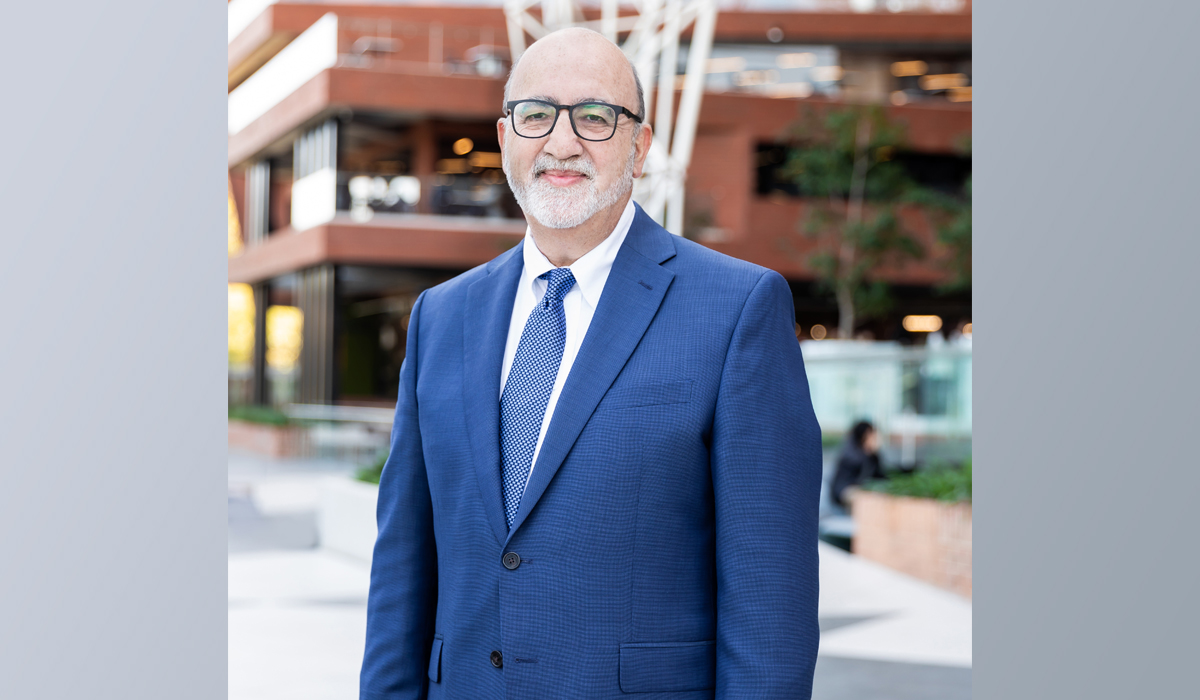
07 Jul Interview with Roberto Moreno, President of the University of the Valley of Guatemala (UVG)
You have led the University of the Valley of Guatemala for more than two decades, establishing it as one of the most recognized institutions in Central America. What are your priorities for the next stage of UVG’s growth and international projection?
Indeed, since its founding in 1966, the university has sought to transform lives through education, science and technology. We have established a roadmap to integrate and strengthen an innovation and entrepreneurship ecosystem in which academia can work in a coordinated manner with the country’s other sectors: the private sector, government, international cooperation agencies and other relevant stakeholders. The goal is for this integration to generate a real impact on economic growth and the overall development of Guatemala.
Higher education in Guatemala has evolved significantly in recent years. How do you assess the current state of the sector and where do you see the main opportunities for improvement and impact?
Well, there are several aspects worth mentioning. First of all, we are very fortunate to benefit from a demographic dividend, as a high percentage of our population is under the age of 35, which represents enormous potential for the country. However, educational coverage remains very limited in terms of the number of people who are able to access tertiary education. This creates a certain urgency to take advantage of that demographic dividend because if young people are unable to develop their potential, that opportunity will not translate into reality and could even become something of a ticking time bomb. Therefore, there is still a significant effort that we, as a sector, must continue to make in expanding educational coverage to ensure that more young Guatemalans have access to high-quality higher education.
This brings us to the second aspect, which is the quality of education. Guatemala faces a significant challenge in this area. Many young people who graduate from secondary school still require additional academic strengthening, so we must move forward simultaneously on two fronts: expanding access and improving educational quality. At the same time, in order to fully capitalize on this demographic dividend and close existing talent gaps, it is necessary to identify the skills and competencies demanded by the country’s various productive sectors. This includes areas such as the agrifood sector, services and other sectors with strong growth potential, as well as opportunities linked to foreign investment.
We must understand what kind of talent Guatemala needs and make a collective effort — not only from the University of the Valley of Guatemala but from the entire education system — to train more young people, do so at the necessary quality standards and focus on those areas and competencies that are essential for driving economic growth and the country’s development.
UVG is known for its focus on STEM, innovation and interdisciplinary learning and it is also the only Guatemalan university included in the QS World University Rankings 2026. What academically distinguishes UVG within the region?
First and foremost, it is our origin. When the university was founded, a conscious effort was made to contribute to the region’s development through science and technology and that purpose remains fully alive within the institution today. To not only strengthen this innovation and entrepreneurship ecosystem but also ensure technology transfer and contribute to solving the country’s challenges, the university has established a roadmap that preserves its core identity and foundation in science and technology. At the same time, we have sought to broaden and complement that foundation with other disciplines that help make technology transfer and the application of science and technology in service of society a reality.
This has resulted in a more comprehensive educational model within the university. On the one hand, there is a cross-cutting focus on science and technology; on the other, a significant effort has been made in areas such as design and creativity to ensure that technology transfer effectively responds to users’ needs and fosters innovation in product design and other solutions.
Likewise, the university has worked for many years in the fields of business and management and we have built a strong business school that complements this holistic vision. This enables us to ensure that the solutions, prototypes and technology transfer processes we develop are not only innovative but also viable and sustainable over the medium and long term.
One of the topics that is of interest to many countries is how to address connectivity challenges in countries with remote areas, where many people cannot easily access digital services or connect on a regular basis. Is there any method or strategy that could help reduce or overcome the technological and digital divide that still persists in some regions?
Yes, there are several aspects worth highlighting. One of the benefits that emerged from the pandemic, paradoxical as it may sound, was that it accelerated many of the hybrid and virtual processes that we had previously approached with a certain degree of hesitation or concern. The situation forced us to adapt and, in a sense, to take the plunge.
At the University of the Valley of Guatemala, considering the need for thousands of young people to have access to high-quality higher education, we are just one month away from launching a new program called AVE: Virtual Learning for Excellence. Through this initiative, we will offer fully virtual and asynchronous degree programs. This means that a young person or an adult will be able to pursue their studies at the time that best suits their needs, while maintaining the same academic quality standards that characterize the university.
What we are seeking to do is respond to a reality in our country: there are thousands of people who graduated from high school but were unable to access higher education due to family, economic, or technological barriers. Today, at ages 25, 30, or 40, these individuals will have the opportunity to access a high-quality university education with the flexibility required by their personal and professional circumstances.
The relationship between Guatemala and, particularly, Miami is very close, largely thanks to the Guatemalan diaspora. What types of collaborations, agreements, or student exchange programs do you develop with institutions in Florida, especially in Miami, or with other countries across the Americas more broadly?
The university has a very important program called UVG Global, whose objective is to strengthen partnerships with universities around the world. We currently have active programs with institutions in the United States, Canada and Latin America — both in Central and South America — as well as collaborations with Europe and Asia across a variety of fields.
For the university, this international cooperation is fundamental for several reasons. First, because one of the best ways to ensure excellence in teaching and research programs is to establish connections with institutions that meet international standards. In addition, it is becoming increasingly important to promote multidisciplinary and global initiatives that enable students to develop a broader worldview and perspective, which they can later apply to solving Guatemala’s challenges while also contributing as agents of change in other regions. There are various collaboration programs, including faculty exchanges that allow professors to move between universities, as well as student exchange programs. These are particularly valuable because the experience of spending a semester in another country represents not only academic growth but also personal development, providing a more comprehensive understanding of the global environment.
In the U.S., the university maintains cooperation with numerous institutions and currently has active programs with approximately 20 universities. Some of these collaborations focus on innovation and entrepreneurship, such as our work with MIT to learn from its innovation ecosystem and adapt it to the Guatemalan context. There are also exchange programs and joint projects, including a major archaeological program in Petén carried out in partnership with Tulane University. Likewise, within the framework of the AVE program, the university has worked with institutions such as Arizona State University to learn from successful experiences in virtual education. Initiatives have also been developed with Florida International University, focusing on student exchange opportunities.
The university continually seeks to identify individuals who are committed to internationalization and exchange processes. Experience has shown that when there are leaders who are passionate about academic cooperation within both institutions, partnerships tend to become success stories. For this reason, the university continues to promote these initiatives, convinced that a global perspective is increasingly necessary in an interconnected world. Today, graduates of the University of the Valley of Guatemala can be found in 36 countries, a number that will likely continue to grow. The opportunity for professionals trained in areas such as science and technology, social sciences, or education to collaborate with stakeholders from different parts of the world represents an enormously valuable opportunity.
One of the most remarkable examples of this internationalization was the launch of Guatemala’s first satellite into space, Quetzal-1, during the pandemic. This project involved nearly 100 people from the university and was made possible through partnerships with institutions such as the University of Colorado, NASA, the German Space Agency, the Japanese Space Agency and the United Nations Office for Outer Space Affairs. Without these international collaborations, an achievement of this magnitude would not have been possible. In addition, it is particularly significant that the average age of the approximately 100 people who participated in the project was 21 years old, clearly reflecting the potential of Guatemala’s demographic dividend. Since then, the university has also participated in four additional space missions, once again in collaboration with universities in Europe and the United States.
Internationalization not only allows us to acquire new knowledge, but also to reaffirm our own values by viewing them within a global context. The mutual learning that emerges from these exchanges is extremely valuable. In the specific case of Florida, in addition to sharing important historical and cultural ties, bilingualism creates additional opportunities for academic and professional collaboration.
Do you also participate in international programs such as Erasmus to promote academic mobility to Europe?
In recent years, the university’s participation in cooperation programs with Europe has also grown significantly. The institution has been involved in initiatives such as Erasmus and has developed extensive collaboration with the German Academic Exchange Service through various exchange programs. These partnerships have enabled the university to work not only with German universities but also with Spanish institutions through a range of academic cooperation programs. Likewise, the university has strengthened its ties with universities in Italy and other European countries. In general, the door to Europe has opened increasingly for the university, driven both by Europe’s growing interest in Latin America and by the academic exchange, research and international collaboration opportunities that have emerged in recent years.
Today, technology and, especially, artificial intelligence are transforming virtually every sector. How the university is incorporating artificial intelligence and digitalization into its academic and administrative processes and how do you promote and regulate these tools among students?
About three years ago, we decided to embrace artificial intelligence and acknowledge that it is a field advancing at an extraordinary pace. As a result, we undertook a very thorough process to identify the best way to incorporate artificial intelligence ethically into all university activities. Last year, we developed a pilot project involving approximately 300 people from different areas, including teaching, research and administration, with the goal of exploring how to adopt the leading artificial intelligence tools. Without a doubt, the greatest challenge lies in the area of teaching: how to use these tools ethically while simultaneously fostering critical thinking and the learning outcomes we expect from our students.
This year, we became the first university to be 100% AI-powered. This means that all of our students, across the university’s three campuses, have access to the leading artificial intelligence tools to support their academic and research activities. At the same time, we have carried out an extensive faculty training and development process to maximize the effective use of these technologies. We are also developing a variety of innovation initiatives to identify how AI can improve administrative processes. For example, we are exploring its application in areas such as academic records and admissions, with the goal of providing better service to students.
In the field of research, we are likewise evaluating different ways of integrating these tools to strengthen academic work. Ultimately, this has been a highly enriching learning process for the institution. At the same time, we continue learning from other organizations and universities that are also exploring how to optimize the use of emerging technological trends and artificial intelligence.
What message would you like to share with students and institutions in the United States that are interested in collaborating with UVG or studying in Guatemala?
Guatemala is an extraordinary country, with tremendous natural and cultural diversity. The University of the Valley of Guatemala has a bilingual and bicultural community and offers academic programs in areas such as the pure sciences, engineering, social sciences, education, design and creativity, as well as business.
For faculty members and students from the United States and particularly from Florida, there are numerous opportunities to engage with both the country and the university. Guatemala has enormous potential and offers the opportunity to participate in highly relevant and impactful projects. We are currently working on the development of Guatemala’s second satellite, so international students and researchers could even become part of the Quetzal-2 project. Likewise, we are advancing the Gran Jaguar project, the first nanochip developed entirely in Guatemala. Similarly, those who visit us have the opportunity to become involved in highly ambitious initiatives in areas such as the environment, health, technology and social sciences. Guatemala provides an ideal setting for academic exchange, research and innovation and everyone is welcome to take part in these efforts.
Sorry, the comment form is closed at this time.