
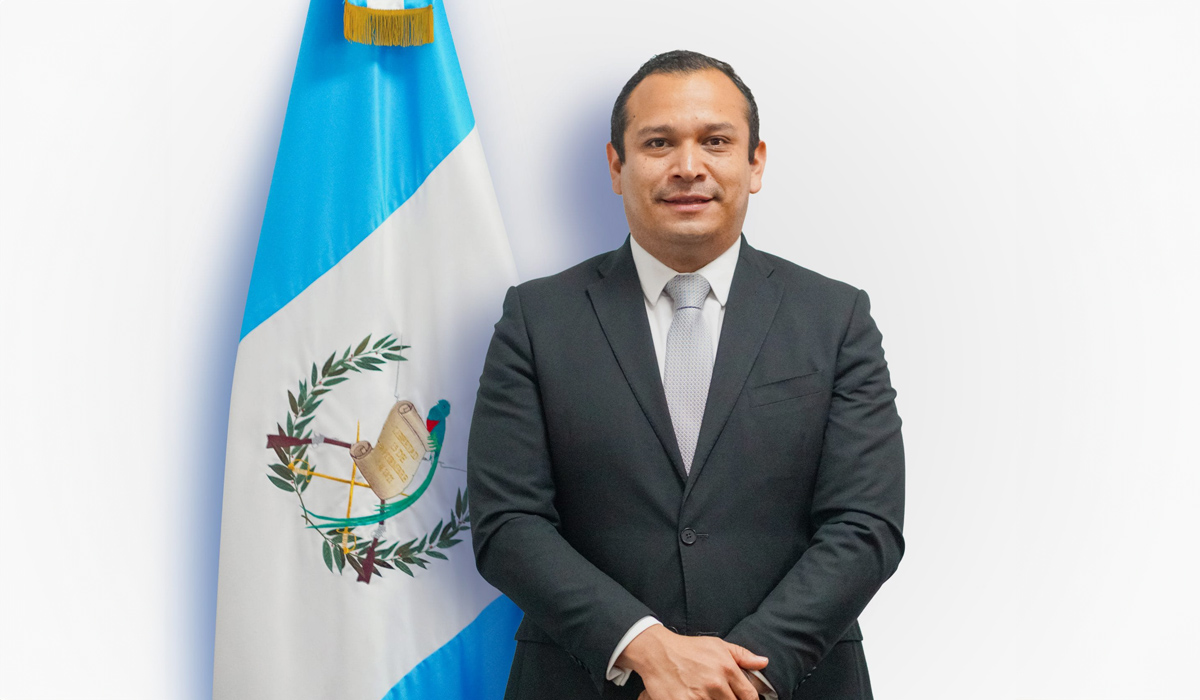
19 Feb Interview with Kevyn Rodríguez Valencia, Interim CEO ANADIE (National Agency for Public-Private Partnerships for Economic Infrastructure Development), Guatemala
ANADIE was created as Guatemala’s specialized agency to structure, tender, oversee and manage PPPs in sectors vital to the country’s economic infrastructure. As Guatemala moves forward with expanding its PPP model, can you introduce the institution and explain its main priorities and goals?
We are a specialized state institution overseeing the public-private partnership (PPP) model in Guatemala. We have our own name for these; Alliances for the Development of Economic Infrastructure, but internationally they’re called PPPs. We provide advice and support to institutions that want to develop projects under the PPP model. We are a decentralized entity, which means our decision-making body comprises representatives from both the public and private sectors. This is unique in Latin America, except for a few cases studied in other countries, because of this combined public-private composition. The body is made up of eight members from the public sector and two from the private sector.
Within the public sector, the Ministry of Finance chairs the council and is joined by the Ministry of Economy, the Ministry of Energy and Mines, the PRONACOM office, which addresses competitiveness in the country, the Presidential Planning Secretariat and one of our main clients, the Ministry of Communications, Infrastructure and Housing. From the private sector, participants include CACIF, the organization that brings together the private sector in Guatemala and the Guatemalan Chamber of Construction.
We’ve been operating as an agency since 2012 and the law dates back to 2010. We are at the forefront of knowledge regarding the PPP model, on par with countries like Peru and Chile. We already possess that institutional knowledge and have strengthened technical capabilities. Since 2021, we have been developing a new portfolio of projects, heavily focused on the most underserved sectors of the country. This involves including municipalities in different regions of Guatemala. The projects are no longer concentrated solely in the central area of Guatemala City, allowing for urban planning and transformation that will give rise to a new vision: a strategy of development hubs in different areas of the country. That is what we are working on and what we are focused on.
A reform to the ANADIE Law is currently underway. This reform aims to streamline contract approval procedures while maintaining legal certainty and security for investors, given the scale of investments in these types of projects. The reform proposal is already in its third reading, which means that the drafting is still pending. The short-term challenge will be its implementation by the agency.
The current portfolio includes six large-scale PPP projects, valued at over $2 billion, encompassing highways, subway systems, airport modernization and a state administrative center. What are the keys to implementing these projects as efficiently and smoothly as possible?
I believe the key to the successful development of these projects is political will and support from the executive branch, which is something our agency has learned over the years. President Arévalo has significantly boosted these projects, especially the State Administrative Center, which we have brought to an advanced stage of structuring. We currently have a tender that incorporates a state-of-the-art heritage survey of Guatemala’s old central train station, which is unprecedented in the country.
This allows us to determine which buildings should be preserved, considering both cultural and industrial heritage. The project not only includes the construction of towers, but also archaeological preservation, the restoration of industrial heritage and the integration of this complex into a civic center. This demonstrates how we have evolved and how political will and the support of the authorities play a fundamental role. This is also linked to our first project currently underway, the Escuintla–Puerto Quetzal highway. The president has taken all the necessary steps to understand the PPP model and break with the traditional public works paradigm, recognizing that these projects require different procedures and a different executive approach.
Furthermore, we have a direct mandate from the agency’s board to implement projects related to solid waste. Sustainability is a priority for the country, so we have strengthened our capabilities to properly structure this project.
In short, political interest has been key to boosting our current portfolio. Thanks to this, the agency has an extraordinary contribution of $13 million quetzales in its budget for project structuring. This is a first and it reflects the president’s approach of laying the groundwork for new projects with a forward-looking vision, geared towards the efficient transformation of the country.
Other flagship projects underway include the Metrorriel, with an investment exceeding $600 million. This project aims to transform urban connectivity in Guatemala City by linking the south-central and north-central areas under a 30-year public-private partnership concession. There’s currently a very interesting synergy in the country regarding the Metrorriel project. This project has also been a commitment of President Arévalo. The agency has conducted various studies that have served as the basis for structuring it under the mechanism determined by the presidency.
Various governing institutions have been strengthened and involved in this area. The U.S. is a key player that has also joined the effort through its military and specialists, who collaborate on both port-related issues and the development of the Metrorriel. The synergy between the studies ANADIE has conducted and the studies currently underway, supported by experts from other countries and led by the U.S. government, undoubtedly opens the international market and assures the quality of the work. These are high-level studies that allow for risk reduction and the visualization of potential future business opportunities. This translates into the legal certainty that the country seeks through this type of project, by coordinating various key actors and with the support of other governments, with the aim of launching these projects as soon as possible.
In which areas could ANADIE benefit most from leveraging PPPs to attract new international capital, especially from strategic partners in North America and Miami in particular?
Currently, there’s a lot of interest in port-related issues and I think there’s a great deal of openness in this area. There’s also a very attractive synergy with the airport sector. There’s a strategy to update and integrate Guatemala’s main airport and wider airport infrastructure. This particularly applies to the northern and western regions and the port sector plays a very important role there as well.
Another emerging sector is tourism which is beginning to take on a leading role in Guatemala’s economy and is being developed according to the government’s master plan. At Lake Atitlán and the interesting region of Sololá, we are going to see a considerable transformation and modernization at the heart of the country, of the sort that the country truly needs.
Another important sector is sports-related construction. The lack of infrastructure isn’t just about connecting point A to point B. I believe that modern infrastructure should change lives and the character of the country; that’s how we at ANADIE see it. At city level, opportunities are created by infrastructure that complements or adapts to the surrounding environment. We currently have an opportunity to develop sports infrastructure. There is a lot of interest in building stadiums, not only in the central part of the country but also in the interior. I believe that recreation and education are very important for the development of this country and I think there is a great deal of expertise from the U.S. and the regions, specifically in tourism and sports. Sololá is integrating not only tourism but also mobility. Cable cars will connect the lake and help develop this infrastructure. There is a very interesting synergy arising from U.S. know-how, specifically from developments in Florida and Miami, related to tourism, which can be a big benefit for us.
We can’t ignore the demographics or the fact that the average Guatemalan is quite young. This is a golden opportunity. We are already implementing projects and adapting and integrating them into our other responsibilities. The influence that young people can have on the future is huge, mainly because these projects translate into opportunities, reducing migration from the country, employment opportunities and greater economic capacity. Our proximity to the United States and our ability to speak English and other languages are advantages that all Guatemalans can leverage.
How important will digitalization be in helping to achieve your projects’ success?
We are very focused on digitalization and have learned from the experiences of other countries. Sometimes it’s useful to observe how bigger players develop their own processes and adopt best practices accordingly, especially regarding digitalization. We have already made significant progress in implementing digital tools within the agency’s various projects and processes. We have frequently been a benchmark in the technical solutions and developments we carry out, not only in institutional intelligence, but also in the digital transformation of day-to-day work. For example, we have digitized documents, modernized procedures and use digital processes for field verification, such as on-site topographic surveys. All of this has significantly expanded our internal capabilities and allowed us to position ourselves as the entity in charge of Guatemala’s infrastructure development under the PPP model.
What is the biggest challenge that ANADIE faces in Guatemala today?
We face a challenge that I believe most countries in the region have faced and which I think generates international interest in Guatemala. That challenge is understanding that these projects transcend governments, that they will benefit future generations, that they mature as different cycles are completed and that they will yield long-term returns to the state. We know that these projects will have a lasting impact, but I think the most important thing is that we’ve already discussed it. The legislative body is examining a reform proposal that is already in its third reading, which will make it possible and establish how it is managed.
Keeping in mind that we are planning 20-50 years into the future, we are putting these plans into action. I think that the fact that institutions are talking more about PPPs allows us to develop and provides greater certainty to investors to come and invest in the country, either under a PPP model or through any other infrastructure projects in the country. Because we are breaking with traditional construction methods and adopting new systems, we are able to develop our infrastructure and close the gap between us and other countries.
Do you have any final messages for the Miami Herald?
The achievement we at ANADIE are most proud of is our commitment to transparency. I believe we’ve distinguished ourselves through our own transparency and by providing investors with high-quality, meticulously structured projects. All our work is aimed at transforming the country and we do it responsibly, ethically and, above all, transparently. That’s something we are very proud of.
As the youngest of all the countries using the PPP model, we hope to one day become a mentor for other countries. We remain committed to transforming and growing the model and providing guidance, legal security and certainty to investors interested in the country, knowing that what we are doing at the agency is of great value; not because we say so, but because there is genuine recognition from multilateral banks, including the IDB, the World Bank and the Central American Bank for Economic Integration which is important for supporting the PPP model in Guatemala.
Sorry, the comment form is closed at this time.