
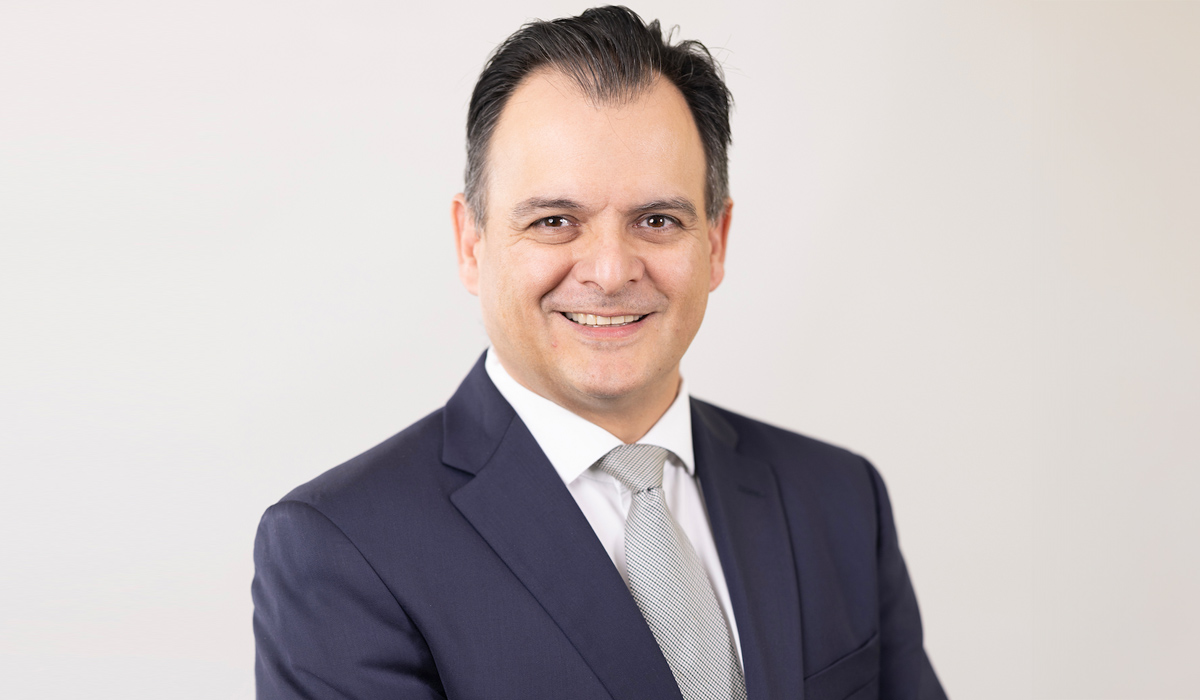
19 Feb Interview with Jorge R. Leal, Chief Executive Officer of Magdalena, Guatemala
How was Magdalena founded in 1983 and what were the key milestones that turned a family sugar mill into the second-largest sugar complex in Latin America?
My father began the mill and together with my mother, he purchased a mill in Puerto Rico. It was disassembled in Puerto Rico and moved to Guatemala. It was a very small mill in its first year. It produced 14,000 tons of sugar. It was the third smallest mill in Guatemala out of the 19 that existed at that time. My father stayed with us until 1991 when he passed away and my mother took over the company. She had learned about the business during his illness and transformed it. My father had been someone who did everything himself and was the central decision-maker. My mother, on the other hand, built a team and gave the company growth that, over the next six years, tripled its size. President Serrano organized a lunch with 80 Guatemalan businessmen and my mother was the only woman. So, in a world of men, she managed to make her way and leave her mark.
I believe she laid many foundations for us on how to run a business. In Magdalena, you will find a lot of what my mother represents — in the way people relate to one another. You will see that hierarchies exist due to responsibility, but in interactions, we are much more similar and equal than different. It is a very beautiful environment, where the individual truly comes first. There is an approach that goes beyond profits: it’s about how you contribute to your society and how you participate as an active member of it.
Later, my brother took over as General Director of the company and also achieved significant growth. We entered the electricity business. Previously, the only entity that could produce electricity in the country was the state but that changed, allowing private participation both in generation and in the transmission and distribution of electricity. This actually arose out of necessity. Guatemala was at a point where electricity consumption was growing, but generation was not. We had blackouts almost every day. With private sector participation, a new market and a new management system were created and it has been a success story in electricity development — I would say at the level of the Americas and perhaps the world. It’s a system that works. Today, La Magdalena has grown in energy supply and we normally provide between 10 and 12 percent of the country’s energy consumption, even before the solar projects come online.
What led to your expansion into Peru?
We took on our first operation outside Guatemala in the sugar sector, in Peru. There, we found an operation already running that could teach us a lot about production. We have learned tremendously from them because they cultivate sugarcane in the desert. All resources are scarce. Everything must be valued and carefully managed. We strongly believe that in agriculture, if you measure what goes in and what comes out, you can achieve sustainable production using less and reusing more.
In Peru, we saw an opportunity to learn how to do this in a context where resources are truly limited. They have an impressive solar energy supply because they are in a desert, but all other inputs must be carefully given to the plant. We are bringing those lessons back to Guatemala and they are helping us become better producers, work more efficiently, and reduce costs.
It’s a new experience. We will continue in the sugarcane sector with this circular economy vision. We use the cane to generate electricity through the fiber and we produce ethanol and alcohol for the pharmaceutical, cosmetic and beverage industries. Everything is utilized. Even what remains from alcohol production, the vinasse, is converted into fertilizer and returned to the fields. It’s about using resources in the best possible way so that production costs are lower and operations are sustainable over time. This philosophy works here and anywhere we want to apply it.
How do you contribute to Guatemala’s energy production?
In Guatemala, fortunately, the country is growing. We have a very stable economy, enviable macroeconomic conditions and an opportunity for growth and industrialization that is beginning to accelerate. This is leading to increasing electricity needs, very similar to what is happening in the U.S. with the introduction of artificial intelligence, which is generating enormous and rapid energy demands. In Guatemala, something similar is happening: we are introducing AI while industrializing at the same time.
Energy requirements are increasing, and meeting them requires significant investments. Therefore, always thinking about the sustainability of our business model, we inaugurated a couple of solar projects. Two solar projects are being inaugurated this year: one has already been launched and the other I hope will be operational by December. But these are just the first of several projects we will build in the future.
We believe that, even though Guatemala does not have oil, gas, or coal like the United States or some South American countries, we do have a solar resource that, with technological development and cost reductions, allows us to be competitive. It is a clean energy production, without waste or by-products, which aligns perfectly with the company’s philosophy. That is why we have invested in solar energy as a viable option, investing in the country’s future and in the development of industrialization and technification with AI, which will continue to demand more energy.
We believe energy must come first, like a road. Conditions must be created to supply it so that industry and technification can develop. That is our focus for the next five years: to continue investing in solar energy. Additionally, we have invited others to do the same. We believe that solar energy is the way to develop the country. Much more will be needed than what we can invest ourselves. The more participants and private companies that invest in energy, the better the future we will build for Guatemala.
And in this potential collaboration, do you see potential from the U.S. to come and collaborate with you in this industrialization of the country?
Absolutely. There are different sectors where participation is possible. We see development banking as a strategic ally. Today, we have worked more with European banks, but we look very favorably on the participation of American development banks. This could include the IFC, the World Bank, or the IDB. It could involve a fairly large project. It is also a fact that the United States is far more advanced in battery technology and in solar generation. It is a complex issue because solar energy only occurs during the day, but energy needs to be supplied day and night. Therefore, when developing solar energy, we also have to think about how we are going to supply it and provide stability to the entire sector. I believe this is an area where the U.S is leading technologically and where we will be able to collaborate and work with the American industry in this regard.
Finally, something that goes hand in hand with the lessons we have learned about reusing and maximizing everything we do: we developed a biochemistry sector. The reason we entered this field was because we decided to learn a lot about biology to improve the production conditions of sugarcane. By learning more about biology, we ended up learning about other elements and molecules that are difficult to access in nature. This, combined with the experience we lived through during the pandemic and what was done with vaccines regarding synthetic biology — modifying organisms to produce something that does not exist in nature — led us to learn a great deal in this area and explore the possibilities of transforming our product, sugar, into molecules that are rare and of greater value to humanity.
That path led us to make an investment in 2023 in a research center in Portugal. The research is focused on health and nutrition. We have worked with American companies to develop some molecules. In the case of the first two, these are proteases, enzymes that help digest proteins and have great potential both for human health and animal feed. I believe that a success story is being written here. These are two companies based in California that we helped develop their technology and explore its applications and I am convinced that these will only be the first of many with which we will work. We have also worked with clients that can use differentiated products. We have seen how enzymes can improve their raw materials or the utilization of products in animals: from pets to livestock in aquaculture, chickens, pigs, or even in milk production. There is a wide range of applications.
Finally, perhaps where we have had the most interest is in human nutrition and how it can be improved. We remain very focused on our roots and on how to contribute to improving society. Guatemala still faces a problem of child malnutrition, but we believe we are working on ways to solve it. We aspire to resolve the problem, or at least 90 percent of it, by the end of the decade. This is a fascinating topic and what we like most about biotechnology is that it has no limits.
The company generates more than 13,200 direct jobs and has a presence in multiple departments across the country. What concrete social impact do you believe your operations have on local communities?
We strive to work actively with all the communities where we have operations, whether in sugarcane production, in transporting it through these areas, or in the communities from which many of our employees come. Our goal is to be active members of each community and to participate in a constructive role.
Our main focus is on three areas: education, health and infrastructure. What we do is identify, together with the communities, the most urgent needs or where we can add the most value and then we jointly define the projects to be developed. We always do this through well-structured programs, where each party — the community, the government and us as a private company — assumes clear commitments.
In education, we have worked extensively on improving schools and providing internet access. In fact, we have already ensured that all students in schools across three municipalities have web connectivity. In health, we support both the improvement of existing facilities and the presence of professionals — doctors and dentists — who assist communities directly. In infrastructure, we contribute to the maintenance of roads and access routes to ensure that communities are always connected and have roads in good condition.
Regarding the scope, two years ago we were working with 207 communities, last year with 214 and this year we are already present in 242. It is a broad and ongoing effort, where we encourage the active participation of all our employees to strengthen ties with the communities in which we operate.
Your company has promoted reforestation programs, watershed care and marine turtle conservation. How are these initiatives integrated with the UN Sustainable Development Goals and with your business strategy?
Participating in all these activities gives you an awareness of resource use and how waste is generated. What you achieve by being active in these kinds of activities, is a consciousness that ultimately translates into corporate awareness regarding the use of resources. And that, in turn, leads to lower costs. Additionally, it gives you a sense of belonging and of being part of the community, truly contributing to improving it. At its core, we see our companies as entities that have an active role in the community and exist to improve society. This aligns closely with our values.
Regarding watershed reforestation, we are creating biological corridors so that wildlife can be maintained and move around without being affected by the country’s agricultural or industrial activities. The turtle conservation program is something that fascinates us and that we have sustained for more than 15 years. We found that in coastal communities there was an overexploitation of sea turtle eggs, mainly for food. The solution was relatively simple: we implemented a program in which we exchanged food supplies for eggs. In this way, we managed to establish centers for egg reproduction and the subsequent release of turtles. It is a very beautiful experience because it involves the children of the community and helps develop awareness about caring for the world and thinking about the future.
With forests and reforestation, it’s similar. We carry out reforestation programs for timber that will be harvestable in the future — a very long-term business that may take 20 to 25 years, but that brings great satisfaction. We also work actively on mangrove reforestation, both on state and private lands. The mangrove is an impressive biological ecosystem, home to countless species of fauna. I believe much of what we do reflects our own corporate culture. That cultural gain is also visible in the business.
What are your main priorities and the biggest challenges you are facing at the moment?
At this moment, we are focused on several fronts. On one hand, we are advancing with the construction of a new plant in Guatemala, which we expect to have operational by the end of 2026. Everything is proceeding according to plan. Additionally, in July we finalized the acquisition in Peru, a process we had been working on for almost a year. The integration of the teams has been very positive so far; both sides are very happy and aware that there is much to learn from each other: what Guatemala can contribute to Peru and what Peru can teach us. It is an interesting challenge but fortunately the Peruvian company already shared a philosophy very similar to Magdalena’s regarding sustainability, environmental conservation and resource utilization, which has allowed for a smooth integration without major cultural clashes. So far, everything is going very well.
At the same time, we continue to advance the expansion of our solar generation capacity. The first project is already operational, the second is under construction and the third is already on the way. We believe that over the next three years this process will accelerate with increasingly larger projects, which presents a management challenge. A key point will be the integration of batteries, which will soon become indispensable in Guatemala. Shifting the energy matrix toward clean sources like solar is positive and necessary, but it also requires parallel development in storage capacity to ensure the stability of the electrical system. This is a challenge not only for the company but for the country as a whole.
In the field of biochemistry, we are also making significant progress. This year, together with a company called Amplifye with whom we collaborate in research, we launched in the U.S a line of enzymes that help digest proteins. We are working to ensure that this launch is successful and expands beyond the American market, with applications that could help reduce malnutrition, particularly in children, globally. It is a project we consider highly valuable and one in which we want to remain actively involved.
Additionally, in 2026 we plan to inaugurate in Guatemala our first protein production plant, a project we are already actively working on. We believe there are innovative ways to reuse materials and convert them into protein sources and we are developing several initiatives along these lines. These are highly motivating projects that will undoubtedly drive accelerated development over the next two to three years.
How do you use artificial intelligence in your projects?
There is extensive use, and it’s something we’ve been learning over time. AI is applied from agriculture to R&D in biochemistry. In agriculture, what we have achieved is the identification of development patterns in the plants, which we can associate with the work being done in the fields. Additionally, this technology can be used to manage distribution or transportation routes, to determine whether fuel and resources are being used efficiently. This goes beyond what a single person could analyze alone, given the volume of data and equipment being managed at any given moment. For example, all machinery operating at Magdalena is equipped with GPS. That information allows us to determine if we are efficiently using machinery or if there are areas for improvement in management. Performing this analysis individually would be extremely difficult, but with artificial intelligence, the system can assist people in making better-informed decisions.
Another application we are developing is the scheduling of sugarcane harvesting, using algorithms that analyze satellite images to identify changes in plantation development. This allows us to determine when a cane field is reaching maturity. Analyzing this data manually would be almost impossible, but with AI assistance, the results allow people to make more informed decisions. Of course, we still need someone to interpret and evaluate the data, but the capabilities of AI are incredible and open up many possibilities for what can be achieved.
What is your final message for readers of this report on Guatemala in the Miami Herald and Nuevo Herald?
I believe that the opportunities we have to adapt technology from the U.S. to our developing countries are becoming faster and easier. We must remain active, aware and willing to do things differently. We don’t have to walk the entire path that the U.S. has traveled to reach where it is today; we can truly make leaps forward.
We see great opportunities in what has already been accomplished in the U.S. and in how we can adapt that technology to our countries. Latin America has many similarities and development opportunities. We are seeing this in how we have discovered technology at universities like the University of California, Davis and how we can be part of that development by integrating both Magdalena in Guatemala and the Bio Orbis research center in Portugal.
This world is becoming increasingly interconnected and we can participate in it without limitations. The fact that we are not as developed as some other countries is not a limitation to participating in cutting-edge technology and being at the forefront today.
Sorry, the comment form is closed at this time.