

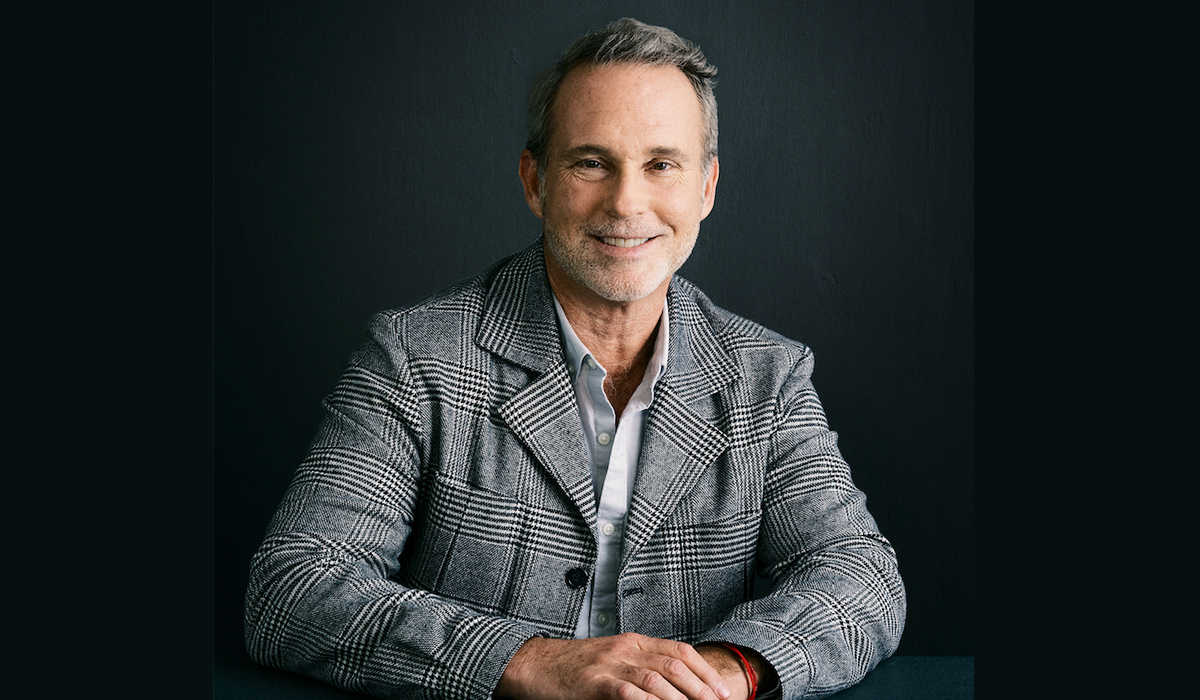
19 Feb Interview with Harris Whitbeck, Director General Guatemala Tourism Board (INGUAT), Guatemala
Guatemala’s tourism sector has seen impressive momentum since 2019, welcoming over three million visitors in 2024—a 15% rise from 2023. Tourism employment has also soared, with more than 541,000 Guatemalans working in the sector in 2024, up 33% from pre-pandemic levels. What are the driving forces behind this surge in visitor numbers, and how is tourism shaping Guatemala’s broader economic outlook?
We’ve implemented a highly targeted communication strategy. Guatemala has not always communicated very well about what it is as a destination and the potential it offers. And when we took on this administration, the truth is that we found a blank slate in terms of international country branding and narrative. For us, that represented a great opportunity, and we began working with the marketing and communications team to determine which strategic communication pillars we would promote in order to attract the type of visitors we wanted to attract.
We focused on the production of handicrafts and textiles, as well as gastronomy, as our communication pillars, because these two areas highlight what sets Guatemala apart from other destinations in the region: authenticity and a direct connection to 3,000 years of history, with very evident cultural depth and a great diversity of cultures coexisting in Guatemala.
So we focused on that, and it worked; the numbers show it. We saw a 15% increase in the number of non-resident visitor arrivals in the first year of the administration. This year we’re at 9%, and the goal for this year is 10%. So we still have a few weeks left, and peak season is just beginning. We’re noticing that the people visiting as tourists are becoming interested in these topics: gastronomy, contact with communities of women weavers. We are actively participating not only in international tourism fairs but also in design fairs, taking groups of Guatemalan weavers to these events so they can share their stories.
The idea is to attract visitors who will want to stay more nights in the country and who will spend more per day. This is not the type of visitor who goes to an all-inclusive resort for 10 days at the beach, but rather someone who wants to connect with the culture, explore the country, and dive a little deeper.
Essentially, it’s about betting on the authenticity of our product and communicating it in a different way. And the numbers are there.
The MICHELIN Guide awarded four hotels in Guatemala with MICHELIN Keys in 2025. The country was also chosen to host Latin America’s 50 Best Restaurants. What steps has Guatemala taken to elevate its hospitality experience, and what can U.S. travelers expect from their visit to “El País de la Eterna Primavera” (The endless spring country)?We are designing an investment-attraction strategy for hotel infrastructure, particularly because it’s clear to us that the country needs more rooms. Tourism operators — especially high-end operators, which is one of the segments we are targeting — have told us this repeatedly. The fact that Michelin has awarded its key to several hotels has worked very much in our favor. We are managing and facilitating conversations between Guatemalan developers and international hotel brands. And just as we did with aviation — where we worked with an aviation consultant in the United States who helped us prepare a country pitch to attract airlines — we are now in the process of doing the same for attracting investment in the hotel sector.
Guatemala currently has a deficit: it is indeed lacking hotels. Airlines have told us they are very interested in entering new markets, such as the International Airport of Flores in Petén, but they clearly need to know that there will be more hotels and international brands. So, this is a major opportunity. Guatemala — and President Arévalo has said this as well — is betting on tourism to make it one of the main engines of the country’s economic development. And because the government is prioritizing this, we are obviously looking to be very creative in creating the conditions that will best attract that type of investment.
In June 2024, Guatemala unveiled its National Strategy for Attracting Foreign Direct Investment, with tourism among its top targets. According to the U.S. Department of State, US FDI rose 5.2% year-on-year in 2024, Which areas of Guatemala’s tourism value chain are most ripe for U.S. investment, and why is now the ideal time to get involved?
I believe now is the right moment because Guatemala is showing that it is a stable country. It has a stable government — a government that is initiating a reform process that had not been addressed in decades. Work is being done to improve the airport system; there has been active progress on this. And although those improvements are not yet visible, they are happening. Why aren’t they visible? Because they involve areas that passengers don’t see: aviation security, infrastructure, and perimeter safety at the airports. I mention this only as an example. These are issues that, once again, were neglected for decades because we come from a system of corrupt governments — and I say that openly — and this government is implementing reforms.
So, investing in a country that is reforming, that is fully committed to transparency and integrity, that is beginning to digitize government processes to make them more efficient, that is promoting a Competitiveness Law, and whose credit rating agencies are recognizing its macroeconomic stability… naturally, this makes it an attractive destination for investment.
What we still need to do — and what we are beginning to work on — is outreach to investors: telling Guatemala’s story and providing them with the data and tools they need to make informed decisions.
One of the factors you just mentioned is political stability. We will also highlight tax incentives, the country’s strategic location, and the demographic bonus. You are very involved with young people, and there is a scholarship program called Becas por Nuestro Futuro. Could you tell us a bit about this program and how you aim to involve young Guatemalans in the country’s tourism sector?
Becas por Nuestro Futuro is a program run by the central government, and I don’t have many details about it because it doesn’t fall under my ministry. I believe it is managed by the Ministry of Social Development. But what I can say is that it is yet another sign that this Government is truly investing —really investing— in the youth, who make up the majority of the population, and in the future.
It is offering opportunities that have never been offered before: opportunities for young people to travel abroad to pursue undergraduate or postgraduate studies, or to travel from their communities to cities within the country if that is what they want to do. This is just one example of the many initiatives underway.
And again, we are only two years into the administration. Sending a young person abroad to study… this Government will not see the immediate results of that decision. But it doesn’t matter. We have to start somewhere, and that is precisely what this Government is doing: laying the foundations for the development of a sustainable, modern, transparent, and efficient country. The results will become evident five or ten years from now. But if we never start, it will simply never happen. Never. I believe that is a key part of this Government’s philosophy: investing in the future.
Guatemala is updating its 2015–2025 Master Plan for Sustainable Tourism to deepen its commitment to ecotourism and community-driven conservation. How is Guatemala setting itself apart in the region with sustainable tourism offerings, and how are local communities being integrated into these initiatives?
The plan covers the period from 2026 to 2036, because the current plan expires this year, and we were fortunate to be the ones to set the guidelines for this new development plan. This plan is unique in several ways, and according to UN Tourism, with whom we are working, it is the first time that the model we designed to create this plan has been used in Guatemala. It is unique, and some countries want to replicate it. It is unique because we conceived it as a co-creation process with the sector. We decided that if we were going to talk about the document that outlines tourism development guidelines for the next ten years, it had to be a document that came from the sector — built by the sector, by tourism-receiving communities, by academia, by government technicians… but it had to be co-created in order to have validity and for the sector to truly adopt it as a dynamic document capable of setting clear goals.
So, over several months, more than 2,000 people across the country participated in — if I’m not mistaken — 160 participatory workshops, moderated by our technicians and by UN Tourism, where all the inputs were collected. And it was fascinating because we went to indigenous communities that had never been heard before, and for them it was very valuable to be able to share their points of view and feel listened to.
All the inputs from this series of participatory workshops will be published. That is, while not all of them were incorporated into the plan itself, they will all be available for anyone who wants to see what ideas emerged.
The idea of the plan is for it to be a very dynamic document that evolves. Unlike the previous plan, which was only evaluated twice in ten years — using different methodologies, which made results impossible to compare — this plan will be evaluated at least every two years, if not more. And it is designed to be flexible, able to change as reality changes, and as technological advances, such as artificial intelligence and big data, progress rapidly — requiring a dynamic plan.
This is another key characteristic of the document. The plan focuses on improving sector governance, promoting community-led tourism development — because that speaks to the authenticity of our product, as I mentioned earlier. It also establishes three main axes of tourism development in the country around improved roads: one road heading north toward Petén, another to the east toward the Caribbean area, and another to the northwest. These roads are intended to serve as development axes, fostering new tourism products and encouraging the participation of new communities in the sector. So that’s it. It is a practical document, it is flexible, and, for me, most importantly, it enjoys a high level of credibility because it was built by the sector itself.
You took on the role of Director General at the start of 2024, during a record-breaking tourism year, with the goal of placing Guatemala among Latin America’s top three destinations. What are your current personal priorities, and where would you like to see Guatemala’s tourism sector by 2028?
Being halfway through the administration, I believe that the work of establishing a different narrative about Guatemala as an attractive tourist destination —and also attractive for investment— is already underway. Now comes what I mentioned earlier: ensuring that the country has the conditions to attract investment and to promote local investment.
Guatemala has an investor sector, and we want to encourage local investment, but we also believe that foreign investment is very appealing and that Guatemala is an attractive destination for this type of investment in hotel development, transportation, and air connectivity. I think what we need to do now is refine that message to attract the type of investment we want.
We are focusing on high-end hotels, but ones that are closely connected to local communities. I prefer to look for hotels with 50 or 60 rooms, rather than large all-inclusive resorts, because these smaller hotels, in more locations across the country, connect more with the communities. So, the idea is to emphasize that Guatemala has authenticity, because tourism products are being designed with the leadership of the communities. And that connection between the visitor, staying in a five-star hotel, and the communities is what makes Guatemala what it is.
Sorry, the comment form is closed at this time.