

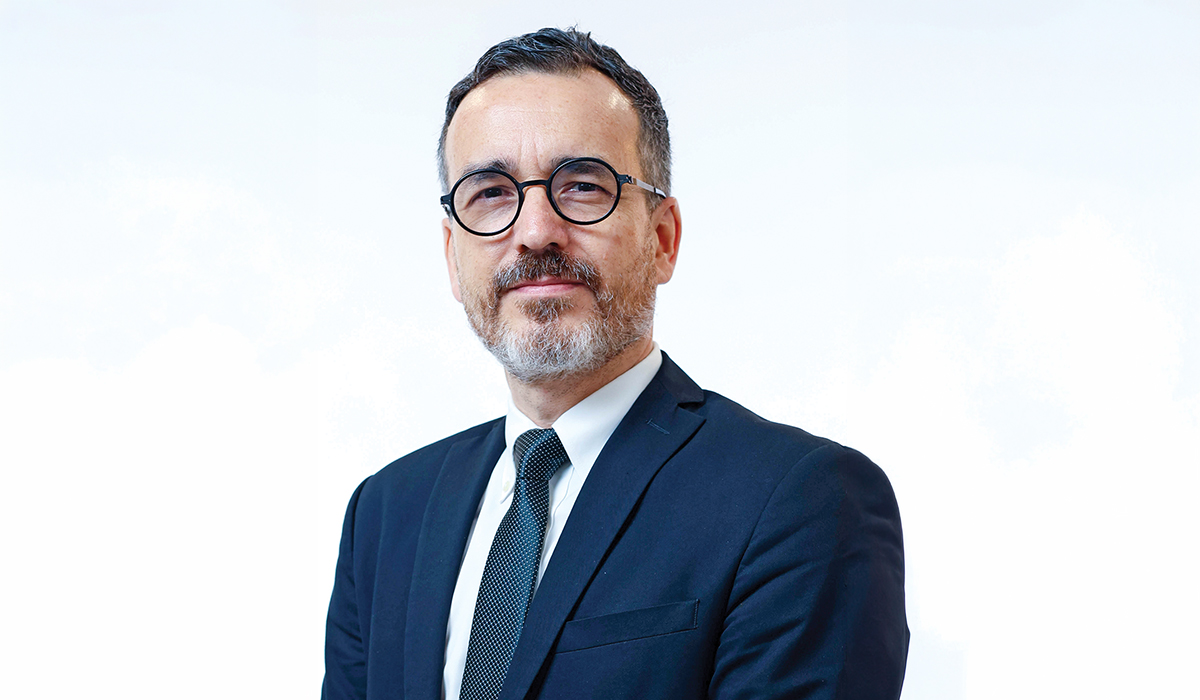
18 Feb Interview with Juan Esteban Sánchez, Executive Director of Invest Guatemala
Guatemala is currently the largest economy in Central America, with solid macroeconomic fundamentals and a GDP of $113.2 billion in 2024. How would you describe the current business climate in Guatemala and the main trends that are shaping its economic landscape?
I believe that a good benchmark to show what the current investment climate and position of Guatemala at a global level is that Guatemala is moving towards investment grade. Recent studies by rating agencies have shown that Guatemala is already in a better position, in terms of the risk level of its treasury bonds, than some countries that already have investment grade ratings. This translates into two things. First, lower volatility in its risk levels. Second, that doing business with Guatemala, despite the many areas that are in need of improvement, can offer good returns.
The most important thing is that there has been stable macroeconomic performance over the last couple of decades. Guatemala has grown by around 3.5 percent in the last ten years. If inflation were above 3.5 percent, we could say that the country would be shrinking in real terms. But, in addition to having growth between 3.5 percent and 4 percent, we’ve kept inflation under control. Last year it was 1.7 percent.
If you analyze economic growth before and after COVID-19, Guatemala was one of the countries that fared best. We had a slight drop in GDP followed by a significant increase the following year, unlike other countries that suffered sharp declines and subsequent recoveries that failed to fully compensate for the losses. Additionally, Guatemala’s exchange rate contributes to this stability and allows for fairly accurate financial and economic projections for businesses. I say this as a finance professional who worked before promoting investment in other countries. Exports, imports and investment projections can be easily made with an exchange rate of around 7.5 to 7.8 quetzales per dollar and this has remained consistent for the last ten years. Guatemala’s current position is that of a low-risk, high-profitability opportunity for investors, but with significant challenges in terms of investment, especially public investment.
What factors give Guatemala a competitive advantage within the region? We know it has a strategic location, macroeconomic stability and excellent connectivity with the U.S, so how do you “sell” Guatemala through Invest Guatemala?
If we differentiate between competitive advantages and comparative advantages — the latter being those that are constant — I would start with location. The fact that we are the northernmost country in South and Central America is very important. This geographic position allows us to be a relevant player, both now and in the medium term, in the context of friendshoring and nearshoring. Furthermore, we have access to two oceans and ports that, while facing challenges for improvement, offer potential. We have very high-capacity submarine cables in each ocean, which strengthens the country’s connectivity.
When discussing competitive advantages — and disadvantages, which I see as future investment opportunities — I would highlight the following points: first, macroeconomic stability as I have already mentioned; another the demographic dividend, which is truly remarkable. Although it is generally advisable to avoid descriptive adjectives in interviews, this is one case where they are justified. Guatemala’s average population age is between 26 and 27 years and its birth rate remains higher than the Latin American average, in contrast to the global trend of declining birth rates. This has two important implications. First, the demographic dividend creates significant opportunities for investors in sectors such as consumer goods, energy and services. Second, with such a young population, Guatemala has 20-30 years of potential growth ahead, driven by the expansion of an emerging middle class that will demand more housing, connectivity, public services, education, healthcare and related services.
Further, Guatemala has a diversified energy mix, although it is not without risks. I emphasize this because the country urgently needs investment in energy generation, transmission and storage. That said, more than 55 percent of electricity generation already comes from renewable sources. This has positioned Guatemala well in the transition toward sustainable energy and has created attractive incentives for investment in renewable generation. Finally, and perhaps more circumstantially, I would note that a wave — or “boom” — is beginning to emerge in the development of industrial parks offering tax incentives. In many countries, these are known as special economic zones or free trade zones. In Guatemala, several major domestic economic groups, along with some international investors, have identified a gap in the market: the limited availability of industrial space with incentives suited to nearshoring. Addressing this gap represents a clear opportunity for investment.
We see, for example, groups like CBC, CMI, Pantaleón and Magdalena that are considering the construction of large industrial parks that will promote population growth. These are, ultimately, small “new cities” that will represent a significant leap in terms of competitiveness and availability of industrial space in the future. Finally, I would highlight that there are clear rules and legal security for investment in Guatemala. Efforts are underway to strengthen institutional certainty in many sectors and levels of security and quality of life have improved significantly in recent years.
Guatemala’s strong economic performance is reaffirmed by its two credit rating upgrades, reaching BB Plus with a stable outlook and a 5.2 percent increase in foreign direct investment last year. What is driving this growing appeal to foreign investors and how is Invest Guatemala positioning the country as a strategic gateway for companies seeking to expand, especially in Latin America?
Since 2021, a significant group of business leaders in Guatemala created the platform “Guatemala no se detiene” (which directly translates as Guatemala Doesn’t Stop, or Guatemala Moving Forward). Its objective is to identify how, through study, preparation and promotion of areas where the country already has strengths, it can attract more foreign direct investment to generate more jobs, increase exports and raise per-capita GDP.
That same year, a major international consulting firm was hired to design a ten-year work plan with a clear objective: to continue doing well what was already working, to improve it further and to address existing gaps. All of this was guided by a central message: the country’s priorities require institutional collaboration among the public sector, the private sector, academia and civil society. As a result of this process, whose implementation began in 2022, the Invest Guatemala agency was created as one of the six working groups within the Guatemala Moving Forward platform. The other five groups focus on human talent, agribusiness, tourism, infrastructure, and legal certainty. This approach aligns closely with what the Bank of Guatemala has consistently emphasized: GDP growth depends on increases in productivity, stronger institutions and higher levels of public, private and foreign investment. This raises an important question: what has been done to increase foreign direct investment?
First, efforts have focused on strengthening the regulatory framework for foreign direct investment. While significant progress has been made, there is still more work ahead. Key initiatives include major infrastructure projects — particularly rural road development — and the identification of high-impact economic sectors across different regions of the country. The consulting firm’s study highlighted several priority sectors for investment.
One particularly important finding is that 75 percent of foreign direct investment in Guatemala comes from reinvestment by companies already operating in the country. In my view, this is a positive thing, as it reflects strong investor confidence. However, it also underscores the need to increase new greenfield investment, which currently accounts for only 10-12 percent of total FDI. For this reason, we are intensifying efforts to attract new investors while continuing to support those that are already established. Several high-priority sectors have been identified. One is the fashion system, including textiles and apparel. Guatemala is consolidating its position as a strategic hub in this industry, supported by domestic investment from, among others, Spanish firms such as Nextil, a strong Korean cluster and growing Colombian presence. Another key sector is business process outsourcing, which generates employment and has driven growth in service exports. While technological change presents new challenges, it remains an important source of jobs, particularly for workers with mid-level skills.
Parts and components manufacturing is another priority. This includes components for vehicles, motorcycles, household appliances and light machinery. Although Guatemala does not yet have large-scale vehicle or motorcycle assembly operations, it does manufacture household appliances and is working to strengthen supply chains in this segment. Sustainable plastics and packaging also offer significant opportunities. Guatemala produces substantial quantities of latex and natural rubber and the challenge is to transform these raw materials into eco-friendly packaging, medical devices and other sustainable products.
The pharmaceutical sector is another area with strong potential. While Guatemala must still strengthen its technological capabilities to compete in more advanced markets, such as the U.S., the sector offers meaningful opportunities for development. Finally, energy and infrastructure are fundamental to the country’s overall competitiveness and represent areas where both challenges and opportunities are highly concentrated.
What services can Invest Guatemala offer to help investors succeed in Guatemala, especially those from the United States?
Guatemala has a significant advantage in that it operates both a private and a public investment promotion agency. Invest Guatemala is the private agency which emerged from the Guatemala Doesn’t Stop platform and last year the public agency, ProGuatemala, was created. This is not about determining which agency is more important; rather, it reflects a complementary approach. We are one of the few countries with two investment promotion agencies and Guatemala Doesn’t Stop itself helped create the conditions for the government to establish its own public institution.
At Invest Guatemala, we are a dedicated investment organization and a fully established Investment Promotion Agency (IPA). We were recently accepted as active members of the World Association of Investment Promotion Agencies. Our work is structured around four main services. The first is the development of strategic information. We place strong emphasis on this area and have recently expanded our team to generate both proactive and reactive information. Proactive information is shared through our platforms, while reactive information responds to specific investor requests, such as sector profiles or labor-cost data. Once we succeed in capturing an investor’s interest, we move to the second stage: promotion. This includes organizing visits, coordinating agendas, participating in international outreach, hosting working meetings and collaborating closely with Guatemalan embassies abroad.
The third service is investment facilitation, or “soft landing.” At this stage, we ensure a smooth entry for investors by working closely with public institutions and local partners. Investors are connected with economic groups, available land and specialized industrial or business spaces. Finally, the fourth service is aftercare, which is becoming increasingly important. In more advanced investment promotion agencies, aftercare can account for up to 25 percent of staff resources. Although we are not yet at that level, our goal is clear: to ensure that investors remain in the country, reinvest, grow and succeed, while also helping to attract new investment.
The promotional work you do is essential in such a competitive global market. Could you share the key projects or campaigns you’re currently running and the ones you have planned?
Guatemala does not yet have a consolidated national brand, and this creates significant challenges in terms of visibility. In the context of investment promotion, that challenge is even greater. For example, an article may appear in the Miami Herald, but two weeks later it is already forgotten. That does not mean it has no impact, but it does illustrate how crowded and competitive the global landscape is, with many countries actively promoting themselves through well-established agencies. Our approach is therefore based on two complementary strategies: internal visibility and external visibility. Even within countries themselves there is often limited understanding of the importance of foreign direct investment and of the value of having both public and private investment promotion agencies. Recently, I published an article in which I noted that one of our key priorities for next year will be to work more closely with the interior regions of the country. We plan to visit municipalities and departmental governments to convey a clear message: we need to work together. The goal is to involve local authorities in promoting FDI particularly because of the economic benefits it generates at the local level.
Most importantly, foreign investment is not uniform across the country; it varies by region. You cannot promote agricultural or agro-industrial investment on the coast in the same way you would in other areas, nor does it make sense to promote solar energy projects in mountainous regions. For this reason, we will conduct regional assessments and tailor our investment promotion strategies to the specific characteristics and competitive advantages of each area.
The second pillar of our strategy is external promotion: reaching investors abroad, both virtually and in person. We have placed strong emphasis on communication and digital outreach. We have a dedicated digital strategist on our team and much of the recent growth in investment leads can be attributed to this focused digital strategy. The objective is to provide clear, reliable and targeted information to investors in specific countries. This also addresses the second part of the question: our approach is highly focused. We are not promoting Guatemala indiscriminately; instead, we target specific countries based on identified priority sectors. First and foremost is the United States, which has a deep understanding of the supply chains that serve its markets and where many potential investors are already seeking nearshoring opportunities. We are also focusing on Colombia, which is currently experiencing a particular economic and political context. Many Colombian business leaders see Guatemala as an attractive alternative due to tariff advantages and lower country risk. This allows them to establish production or operational capacity that mitigates domestic risks without fully relocating their businesses. Another important focus is Central America and the Caribbean. Companies from El Salvador, Honduras and the Dominican Republic are increasingly investing abroad. Guatemala is both investing in the region and receiving investment from neighboring countries. We are also actively working with Mexico, and beyond the Americas, we see targeted opportunities in niche markets in Spain, Korea, Japan and, to a lesser extent, Germany. Taiwan also deserves special mention. Guatemala maintains diplomatic relations with Taiwan and this opens very interesting opportunities for cooperation and investment.
Finally, when it comes to free trade agreements, many countries highlight their strategic location and trade networks. In Guatemala’s case, membership in the Dominican Republic–Central America Free Trade Agreement represents a real competitive advantage. Even regional trade agreements can make it more cost-effective for a Colombian company to manufacture in Guatemala and export to the Dominican Republic, due to tariff advantages, despite the similar geographic distances involved. We analyze these factors in depth from a financial perspective, evaluating the combined impact of free trade agreements, geographic location and macroeconomic conditions. Ultimately, our focus is on what investors care about most: how to increase returns and reduce costs. It is on this basis that we design and apply our investment promotion strategies.
Which sectors of Guatemala do you think might be of most interest to readers, or which ones are you currently working on?
A significant percentage of U.S. companies need to update their supply chains to optimize their internal processes. There are two key messages that we are paying close attention to. The first is that we cannot compete directly with the incentives the U.S. currently offers to companies that establish operations there. Many firms require a physical presence in the U.S. to access its market more efficiently, which explains why large companies are setting up operations across various U.S. states. That said, there are strong opportunities within the supply chain. This is why we are placing particular emphasis on two areas: the auto parts sector and the fashion industry. The challenge, and the opportunity, lies in how Guatemala can supply U.S. industries with tangible added value, which is not easy to achieve, while integrating efficiently into their production chains.
Take the automotive industry as an example. We recognize that vehicle assembly will not take place in Guatemala; that segment is already well covered by Mexico and the U.S. However, there are clear opportunities to add value. For instance, if Guatemalan companies in the textile sector — an area of considerable strength for the country — can diversify part of their production and begin manufacturing items such as bus seats, the potential is significant. Another area with strong potential is packaging, particularly packaging that meets high environmental certification standards. The U.S. food industry consumes enormous volumes of packaging and we have already seen concrete examples of Indian companies establishing sustainable packaging projects in Guatemala, especially for the chocolate industry. We believe initiatives like these offer very promising prospects for growth.
Regarding digitization, how would you describe the current situation in Guatemala and how can you contribute to raising that level?
Vice Minister Valeria Prado is doing a fantastic job. She acts almost as a leader within the public investment promotion agency. A digitization law already exists, but the challenge lies in its implementation and practical application. Currently, Guatemala is significantly reducing bureaucratic procedures, both for the public and for local and international investors. However, I believe there is still much to learn and do regarding digitization.
It is necessary to make progress in reducing procedures, improving connectivity and, above all, creating the right conditions for technology-focused startups to develop. It is not our primary focus. We are not an agency whose 80/20 strategy is geared toward promoting technology startups. But we are exploring agreements with technology companies in Miami that want to establish their platforms in Guatemala. This could incentivize the creation of ventures by young Guatemalans, and we believe that in one or two years we could see concrete results from these initiatives.
How do you envision Guatemala consolidating its position as a leading force in the regional and global investment landscape and what role will you play in that process?
When I think about long-term achievements, I see two main objectives: increasing the country’s visibility and strengthening the visibility of the agency itself. In the medium term, I believe Guatemala will be internationally recognized as a genuine investment opportunity and as a safe and reliable place to invest. At the same time, I envision a highly specialized agency, with a small but exceptionally well-trained team capable of managing investment attraction cases efficiently and on a personalized basis.
I also see Guatemala Doesn’t Stop consolidating itself as the platform that helped drive a fundamental shift in the country’s development and growth. In terms of investment attraction, Guatemala is already the largest economy in Central America and I expect it to continue strengthening that position and remaining the region’s leading economy and projecting that image to the world. Although it is not widely recognized, Guatemala has enormous economic potential that deserves to be communicated more clearly.
Moreover, I see the country establishing itself as a strong hub for tourism and legal services, capable of attracting specialized talent and international companies. Ultimately, what is known is what is valued and Guatemala must continue to tell its story. I generally avoid comparisons, but I believe Guatemala has everything it needs to become the most important nearshoring platform in the region and one of the most relevant in Latin America in the years ahead.
The most important thing — and something Guatemala stands out for internationally — is the quality of its people. I’m not just talking about the demographic bonus. Guatemalan businesspeople are skilled, knowledgeable, understand complexity and are reliable. Guatemalans are loyal, committed and always seek mutual benefit. Doing business in Guatemala means working with a local partner who is genuinely interested in protecting and developing everyone’s business.
It’s also important to remember that Guatemala is projected as one of the most important economies in the region and an attractive destination for investment. But we can’t do it alone. Growth must be accompanied by collaboration, especially with strategic allies. In that sense, the Florida region, particularly Miami, plays a key role. With everything that’s happening, Florida has become a popular relocation point for families. There are very important offices and investment funds and I believe the connection between Guatemala and the United States should be strengthened through Florida and Miami, among others. I think that that relationship is fundamental and has great potential.
Sorry, the comment form is closed at this time.