
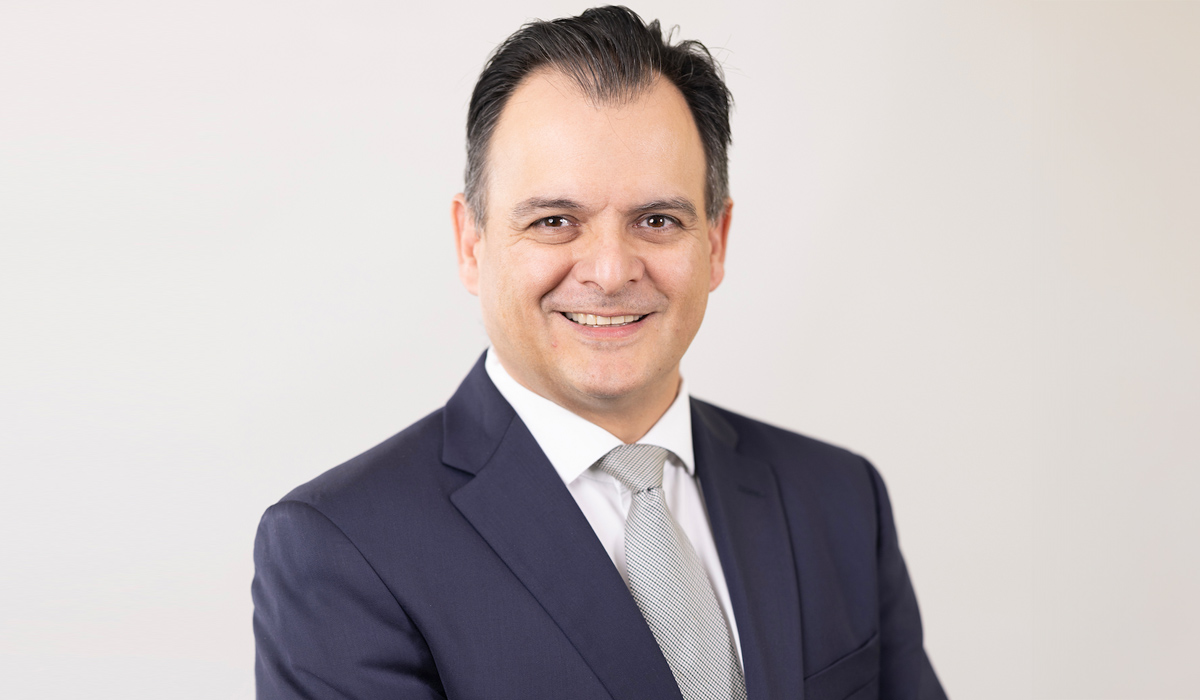
19 Feb Entrevista al Jorge R. Leal, Chief Executive Officer de Magdalena
¿Cómo nació Magdalena en 1983 y cuáles fueron los hitos clave que convirtieron a un ingenio familiar en el segundo complejo azucarero más grande de América Latina?
Mi padre y mi madre compraron un ingenio en Puerto Rico en 1983. Se desarmó en Puerto Rico y lo movieron a Guatemala. Ese es el origen. Era un ingenio muy pequeño en su primer año: produjo 14.000 toneladas de azúcar, era el tercero más pequeño de Guatemala, dentro de los 19 que había en ese momento. Mi padre nos acompañó hasta el año 91. Él fallece y la empresa la toma mi madre, quien se dedicaba verdaderamente a la filantropía, a la educación, a buscar talentos jóvenes que no tuvieran los recursos para desarrollarse plenamente, pero le tocó un cambio muy grande. Mi padre tuvo un cáncer que duró dos años, y ella lo acompañó durante todo el tiempo que estuvo enfermo. En ese proceso, aprendió sobre el negocio. Mi madre es una mujer impresionante: tomó la empresa y la transformó. Mi padre era alguien que hacía todo y era el centro donde se tomaban todas las decisiones. Mi madre, en cambio, formó un equipo de trabajo y le dio un crecimiento a la empresa que, en los siguientes seis años, la triplicó. Es una historia muy bonita de cómo una mujer, en un país que era considerado en los negocios bastante machista, logró algo impensable en ese momento. Hay algunas anécdotas. Si me voy un poco más para atrás, al presidente Serrano, él organizó un almuerzo con 80 empresarios de Guatemala. Mi madre era la única mujer. Entonces, en un mundo de hombres, logró abrirse camino y dejar huella.
Creo que ella nos sentó muchas bases sobre cómo se hace empresa. En Magdalena vas a encontrar mucho de lo que es mi madre, doña Yolanda. En la manera en que existe un trato entre personas. Vas a ver que las jerarquías existen por la responsabilidad, pero en el trato somos mucho más parecidos que diferentes. Es un ambiente muy bonito, donde la persona verdaderamente va primero y donde todos nos relacionamos de una manera muy agradable. Creo que, en general, la empresa entera está enfocada en ver cómo mejorar uno mismo y cómo ayudan a mejorar las demás personas, ya sean colaboradores, comunidades o familias. Hay un enfoque que va más allá de las utilidades: se trata de cómo contribuyes a tu sociedad y cómo participas como un miembro activo de ella.
La empresa siguió creciendo. Mantuvimos un crecimiento constante. Mi hermano asumió la Dirección General de la empresa y también logró un crecimiento muy importante. Entramos al negocio de la energía eléctrica. El sector de la energía se desregularizó. Antes, el único que podía producir electricidad en el país era el Estado. Eso cambió y se permitió la participación de privados tanto en la generación como en el transporte y la distribución de energía eléctrica. Esto surgió, en realidad, de una necesidad. Guatemala estaba en un momento en el que el consumo eléctrico crecía, pero no así la generación. Teníamos apagones prácticamente todos los días. Con la participación de los privados se creó un nuevo mercado, un nuevo sistema de administración, y ha sido una historia de éxito en el desarrollo eléctrico, yo diría que a nivel de América y quizás del mundo. Es un sistema que funciona. Hoy en día, La Magdalena ha crecido en el abastecimiento de energía, y normalmente suplimos entre el 10% y el 12% de la energía que consume el país. Y eso es incluso antes de que entren los proyectos solares.
¿Qué motivó su expansión en Perú?
Asumimos nuestra primera operación fuera de Guatemala en el sector azucarero, en Perú. Mucha gente me pregunta: ¿por qué Perú? Porque es un país encantador, donde nos sentimos en casa. Somos muy similares en cuanto a las personas. Nos enamoramos del lugar y de su gente; además, encontramos una operación ya en marcha, que nos podía enseñar mucho sobre la producción. Hemos aprendido muchísimo de ellos, porque cultivan caña en el desierto. Todos los recursos son escasos. Todo hay que valorarlo y cuidarlo. Y nosotros creemos mucho en eso. En agricultura, creemos que si mides lo que entra y lo que sale, logras una producción sostenible usando menos y reutilizando más.
Vimos en Perú la oportunidad de aprender cómo hacerlo en un contexto donde verdaderamente los recursos son limitados. Tienen una oferta impresionante de energía solar, porque están en un desierto, pero todo el resto de los insumos hay que dárselos a la planta. Esos aprendizajes los estamos trayendo a Guatemala y nos están ayudando a ser mejores productores, a trabajar de manera más eficiente y a reducir costos.
Es una nueva experiencia. Vamos a seguir en el sector de la caña con esta visión de economía circular. Usamos la caña para generar energía eléctrica mediante la fibra, producimos etanol y alcohol para la industria farmacéutica, cosmética y también para bebidas. Todo se aprovecha. Incluso lo que queda de la producción de alcohol, la vinaza, lo convertimos en fertilizante y lo devolvemos al campo. Se trata de usar los recursos de la mejor manera, para que el costo de producción sea menor y las operaciones sostenibles en el tiempo. Esa filosofía nos sirve aquí y en cualquier parte donde queramos aplicarla. Además, hemos encontrado que los aprendizajes que hemos tenido en el azúcar son aplicables a otras industrias.
¿De que manera contribuye su empresa a la producción energética de Guatemala?
El segundo tema es la energía eléctrica. En Guatemala, afortunadamente, el país está creciendo. Tenemos una economía muy estable, unas condiciones macroeconómicas envidiables y una oportunidad de crecimiento e industrialización que está empezando a acelerarse. Esto nos está llevando a necesidades crecientes de energía eléctrica, muy similar a lo que está pasando en Estados Unidos con la introducción de la inteligencia artificial, que está generando demandas enormes y rápidas de energía. En Guatemala está pasando algo parecido: estamos introduciendo IA y, al mismo tiempo, industrializándonos.
Energy requirements are increasing, and meeting them requires significant investments. Therefore, always thinking about the sustainability of our business model, we inaugurated a couple of solar projects. Two solar projects are being inaugurated this year: one has already been launched and the other I hope will be operational by December. But these are just the first of several projects we will build in the future.
We believe that, even though Guatemala does not have oil, gas, or coal like the United States or some South American countries, we do have a solar resource that, with technological development and cost reductions, allows us to be competitive. It is a clean energy production, without waste or by-products, which aligns perfectly with the company’s philosophy. That is why we have invested in solar energy as a viable option, investing in the country’s future and in the development of industrialization and technification with AI, which will continue to demand more energy.
We believe energy must come first, like a road. Conditions must be created to supply it so that industry and technification can develop. That is our focus for the next five years: to continue investing in solar energy. Additionally, we have invited others to do the same. We believe that solar energy is the way to develop the country. Much more will be needed than what we can invest ourselves. The more participants and private companies that invest in energy, the better the future we will build for Guatemala.
And in this potential collaboration, do you see potential from the U.S. to come and collaborate with you in this industrialization of the country?
Absolutely. There are different sectors where participation is possible. We see development banking as a strategic ally. Today, we have worked more with European banks, but we look very favorably on the participation of American development banks. This could include the IFC, the World Bank, or the IDB. It could involve a fairly large project. It is also a fact that the United States is far more advanced in battery technology and in solar generation. It is a complex issue because solar energy only occurs during the day, but energy needs to be supplied day and night. Therefore, when developing solar energy, we also have to think about how we are going to supply it and provide stability to the entire sector. I believe this is an area where the U.S is leading technologically and where we will be able to collaborate and work with the American industry in this regard.
Finally, something that goes hand in hand with the lessons we have learned about reusing and maximizing everything we do: we developed a biochemistry sector. The reason we entered this field was because we decided to learn a lot about biology to improve the production conditions of sugarcane. By learning more about biology, we ended up learning about other elements and molecules that are difficult to access in nature. This, combined with the experience we lived through during the pandemic and what was done with vaccines regarding synthetic biology — modifying organisms to produce something that does not exist in nature — led us to learn a great deal in this area and explore the possibilities of transforming our product, sugar, into molecules that are rare and of greater value to humanity.
That path led us to make an investment in 2023 in a research center in Portugal. The research is focused on health and nutrition. We have worked with American companies to develop some molecules. In the case of the first two, these are proteases, enzymes that help digest proteins and have great potential both for human health and animal feed. I believe that a success story is being written here. These are two companies based in California that we helped develop their technology and explore its applications and I am convinced that these will only be the first of many with which we will work. We have also worked with clients that can use differentiated products. We have seen how enzymes can improve their raw materials or the utilization of products in animals: from pets to livestock in aquaculture, chickens, pigs, or even in milk production. There is a wide range of applications.
Finally, perhaps where we have had the most interest is in human nutrition and how it can be improved. We remain very focused on our roots and on how to contribute to improving society. Guatemala still faces a problem of child malnutrition, but we believe we are working on ways to solve it. We aspire to resolve the problem, or at least 90 percent of it, by the end of the decade. This is a fascinating topic and what we like most about biotechnology is that it has no limits.
The company generates more than 13,200 direct jobs and has a presence in multiple departments across the country. What concrete social impact do you believe your operations have on local communities?
We strive to work actively with all the communities where we have operations, whether in sugarcane production, in transporting it through these areas, or in the communities from which many of our employees come. Our goal is to be active members of each community and to participate in a constructive role.
Our main focus is on three areas: education, health and infrastructure. What we do is identify, together with the communities, the most urgent needs or where we can add the most value and then we jointly define the projects to be developed. We always do this through well-structured programs, where each party — the community, the government and us as a private company — assumes clear commitments.
In education, we have worked extensively on improving schools and providing internet access. In fact, we have already ensured that all students in schools across three municipalities have web connectivity. In health, we support both the improvement of existing facilities and the presence of professionals — doctors and dentists — who assist communities directly. In infrastructure, we contribute to the maintenance of roads and access routes to ensure that communities are always connected and have roads in good condition.
Regarding the scope, two years ago we were working with 207 communities, last year with 214 and this year we are already present in 242. It is a broad and ongoing effort, where we encourage the active participation of all our employees to strengthen ties with the communities in which we operate.
Your company has promoted reforestation programs, watershed care and marine turtle conservation. How are these initiatives integrated with the UN Sustainable Development Goals and with your business strategy?
Participating in all these activities gives you an awareness of resource use and how waste is generated. What you achieve by being active in these kinds of activities, is a consciousness that ultimately translates into corporate awareness regarding the use of resources. And that, in turn, leads to lower costs. Additionally, it gives you a sense of belonging and of being part of the community, truly contributing to improving it. At its core, we see our companies as entities that have an active role in the community and exist to improve society. This aligns closely with our values.
Regarding watershed reforestation, we are creating biological corridors so that wildlife can be maintained and move around without being affected by the country’s agricultural or industrial activities. The turtle conservation program is something that fascinates us and that we have sustained for more than 15 years. We found that in coastal communities there was an overexploitation of sea turtle eggs, mainly for food. The solution was relatively simple: we implemented a program in which we exchanged food supplies for eggs. In this way, we managed to establish centers for egg reproduction and the subsequent release of turtles. It is a very beautiful experience because it involves the children of the community and helps develop awareness about caring for the world and thinking about the future.
With forests and reforestation, it’s similar. We carry out reforestation programs for timber that will be harvestable in the future — a very long-term business that may take 20 to 25 years, but that brings great satisfaction. We also work actively on mangrove reforestation, both on state and private lands. The mangrove is an impressive biological ecosystem, home to countless species of fauna. I believe much of what we do reflects our own corporate culture. That cultural gain is also visible in the business.
What are your main priorities and the biggest challenges you are facing at the moment?
At this moment, we are focused on several fronts. On one hand, we are advancing with the construction of a new plant in Guatemala, which we expect to have operational by the end of 2026. Everything is proceeding according to plan. Additionally, in July we finalized the acquisition in Peru, a process we had been working on for almost a year. The integration of the teams has been very positive so far; both sides are very happy and aware that there is much to learn from each other: what Guatemala can contribute to Peru and what Peru can teach us. It is an interesting challenge but fortunately the Peruvian company already shared a philosophy very similar to Magdalena’s regarding sustainability, environmental conservation and resource utilization, which has allowed for a smooth integration without major cultural clashes. So far, everything is going very well.
At the same time, we continue to advance the expansion of our solar generation capacity. The first project is already operational, the second is under construction and the third is already on the way. We believe that over the next three years this process will accelerate with increasingly larger projects, which presents a management challenge. A key point will be the integration of batteries, which will soon become indispensable in Guatemala. Shifting the energy matrix toward clean sources like solar is positive and necessary, but it also requires parallel development in storage capacity to ensure the stability of the electrical system. This is a challenge not only for the company but for the country as a whole.
In the field of biochemistry, we are also making significant progress. This year, together with a company called Amplifye with whom we collaborate in research, we launched in the U.S a line of enzymes that help digest proteins. We are working to ensure that this launch is successful and expands beyond the American market, with applications that could help reduce malnutrition, particularly in children, globally. It is a project we consider highly valuable and one in which we want to remain actively involved.
Additionally, in 2026 we plan to inaugurate in Guatemala our first protein production plant, a project we are already actively working on. We believe there are innovative ways to reuse materials and convert them into protein sources and we are developing several initiatives along these lines. These are highly motivating projects that will undoubtedly drive accelerated development over the next two to three years.
How do you use artificial intelligence in your projects?
There is extensive use, and it’s something we’ve been learning over time. AI is applied from agriculture to R&D in biochemistry. In agriculture, what we have achieved is the identification of development patterns in the plants, which we can associate with the work being done in the fields. Additionally, this technology can be used to manage distribution or transportation routes, to determine whether fuel and resources are being used efficiently. This goes beyond what a single person could analyze alone, given the volume of data and equipment being managed at any given moment. For example, all machinery operating at Magdalena is equipped with GPS. That information allows us to determine if we are efficiently using machinery or if there are areas for improvement in management. Performing this analysis individually would be extremely difficult, but with artificial intelligence, the system can assist people in making better-informed decisions.
Another application we are developing is the scheduling of sugarcane harvesting, using algorithms that analyze satellite images to identify changes in plantation development. This allows us to determine when a cane field is reaching maturity. Analyzing this data manually would be almost impossible, but with AI assistance, the results allow people to make more informed decisions. Of course, we still need someone to interpret and evaluate the data, but the capabilities of AI are incredible and open up many possibilities for what can be achieved.
What is your final message for readers of this report on Guatemala in the Miami Herald and Nuevo Herald?
I believe that the opportunities we have to adapt technology from the U.S. to our developing countries are becoming faster and easier. We must remain active, aware and willing to do things differently. We don’t have to walk the entire path that the U.S. has traveled to reach where it is today; we can truly make leaps forward.
We see great opportunities in what has already been accomplished in the U.S. and in how we can adapt that technology to our countries. Latin America has many similarities and development opportunities. We are seeing this in how we have discovered technology at universities like the University of California, Davis and how we can be part of that development by integrating both Magdalena in Guatemala and the Bio Orbis research center in Portugal.
This world is becoming increasingly interconnected and we can participate in it without limitations. The fact that we are not as developed as some other countries is not a limitation to participating in cutting-edge technology and being at the forefront today.
Sorry, the comment form is closed at this time.