
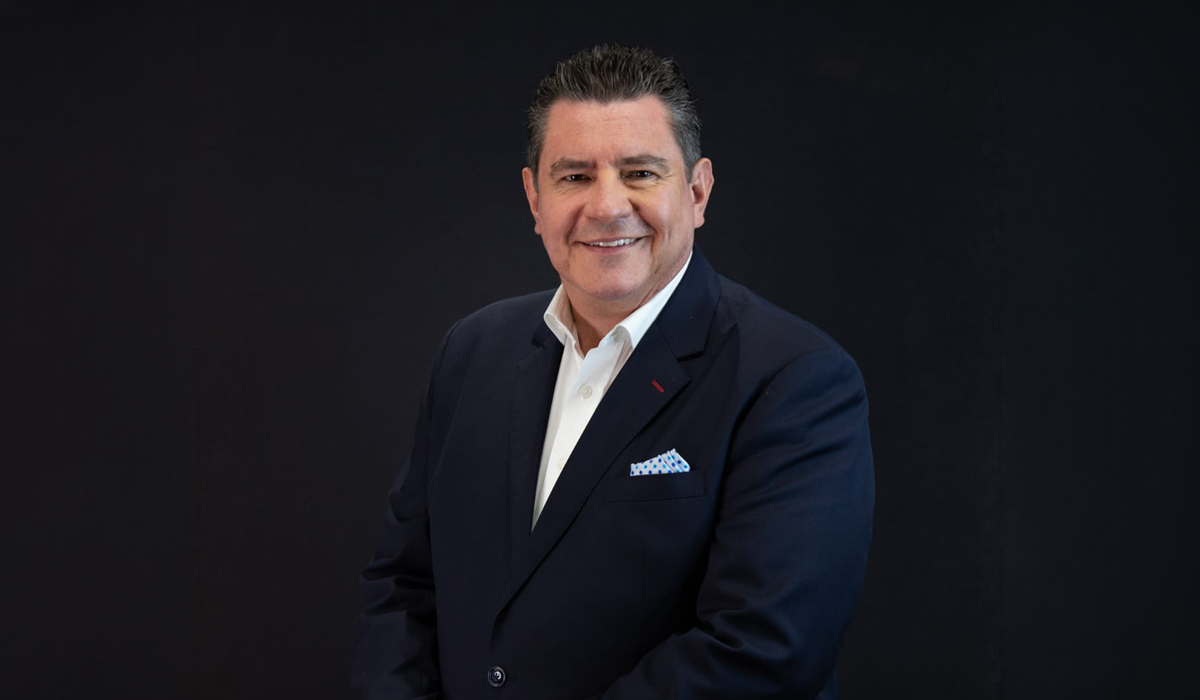
07 Jul Interview with Julio Álvarez, Managing Director y Chief Country Officer, City Guatemala
Citi has been operating in Guatemala since 1974. How has the bank’s role in the Guatemalan financial system evolved in that time and what differentiates your value proposition today compared to commercial banking.
We have been operating here in Guatemala for more than 50 years and our presence has truly evolved over time. We started out as a corporate bank and first evolved into commercial banking and then we returned again to Citi’s roots, which is corporate banking. Today, we serve the large corporations in Guatemala. We serve international companies operating here in Guatemala. We serve the financial sector. In the end, we have ended up being the bank of banks in many cases. We also operate with multilateral organizations and, above all, we operate with some public sector organizations.
Our focus today is to offer these Guatemalan clients the cross-border services that these clients require. Not only the services needed here in Guatemala, but also the services needed outside of Guatemala in other countries in Central America, the Caribbean, the Americas, the United States and Europe. Just as we serve our international clients operating here in Guatemala such as subsidiaries of Spanish companies operating here, our clients from those countries as well. We have an entire network throughout Citi, where our Guatemalan clients have coverage in Mexico, in the United States, in any country in Central America and the Caribbean.
We are in more than 90 different markets around the world and the solutions we provide to our Guatemalan clients or international clients operating here in Guatemala is that of cross-border support. So whether you want to enter Guatemala or you want to leave Guatemala to grow outside, Citi can be at the center of that type of support. In other words, that is really the way we operate. That is where the greatest added value comes from.
Within corporate and investment banking, which services show the highest demand in Guatemala and what do they reflect about the country’s economic evolution, from your point of view?
Guatemala’s economy has continued to evolve and has grown a lot. Currently, there are corporations within Guatemala that have expanded enormously beyond Guatemala’s borders. What we have typically seen a lot is supporting these corporations through export and import financing. We have provided a lot of support in everything related to foreign exchange management — not only the day-to-day transaction operations, but also to cover the risks surrounding the currencies to which they are exposed in other countries.
In recent years, we have also seen a major expansion of Guatemalan capital outside of Guatemala, toward the United States and toward other countries within the region, where we accompany these clients either by providing them services such as advisory services in mergers and acquisitions and services to help them structure the financing for how to carry out those acquisitions. We also help these clients have much more visibility outside of Guatemala and, above all, to also have much more control over their companies. If you have a Guatemalan company that has operations — let’s say — in the United States, operations in Mexico and in Colombia, with the centralized services that Citi offers, they can manage their operations from here in Guatemala, or if not manage them, at least have controls or visibility into what is happening in those countries from a financial perspective. They can offer operations such as foreign exchange hedging and it is that capability that allows clients to financially manage those companies through a platform, Citi’s platform.
The truth is that the quetzal’s performance in recent years has been quite good. Guatemala’s economy is a highly stable economy. We have, I believe, fairly healthy interest rates, reasonable growth and a parity that I also think is quite stable. Guatemala does not grow more due to some infrastructure limitations, but aside from that, it is a very strong economy. There is a private sector with a lot of drive that really supports the economy a lot.
The Guatemalan economy is very linked to international trade and remittances, which represent up to 19% of GDP. How does Citi support Guatemalan companies in global supply chains and international markets?
The way we see it with clients is that we want to be their most trusted advisor and the way we operate is exactly that: helping them ensure that those flows of capital between countries happen in a more orderly and more controlled way. We support them through export support, we support them through FX operations, currency exchange, but, beyond that, we also support them in carrying out currency hedging operations.
For example, to say: “Hey, you know what? Look, I’m planning to receive a certain amount of dollars in the future, so I want to convert them into quetzales.” I help them convert them one month from now, two months from now, within the timeframe they are looking for. Not only dollars, but also euros or any other currency that has some kind of parity against the quetzal. It is about giving our clients the tools so they can operate under an economy that I see as quite dynamic.
How clear is digitalization in the bank’s strategy?
Let me put it this way: Citi Direct, at the end of the day, is the center of our banking within our electronic banking platform. However, what we seek with our clients is not just Citi Direct, but the connectivity we are going to have with them. Today, in all of Citi’s global operations, 97% are digital and the rest, in some way, still require something manual.
Here in Guatemala we were the same: 97 percent of our operations were digital and a small percentage was manual. Today we are 100 percent digital here in Guatemala. A year or a year and a half ago, we closed the branch we had here, because it was no longer necessary to have a physical branch. All of our clients’ operations are carried out digitally and the reality is that this makes things much simpler for our clients. If you look at it from the employees’ perspective, it is also a more efficient way to control the operation, because at the end of the day, what having a digital bank requires is always maintaining a strong security environment in order to offer it..
What we try to do is say there are different levels of connectivity, but where we get to is complete connectivity, where our clients, in order to operate with their bank, can access their banking operations which connect automatically to our banking core. In other words, they no longer have to log into an online banking platform to perform operations. What we are really looking for is to offer the client that simple connectivity, where the operations they are doing in their systems go directly through.
There are many levels of connectivity, but in the end, that is what we are looking for, which I believe is what provides added value to all our clients, not only corporates, but also international clients, other financial institutions, the public sector, the Bank of Guatemala. In short, we always make all of that available and at the disposal of our clients.
This is an initiative that Citi has at a global level. When we offered this alternative to our clients — which was a process and we have already done it in several countries — when it was Guatemala’s turn, we told our clients we are doing this and many of them found it simple. For others, they even thanked us, because they said: ‘Now that you are setting this goal for me, I appreciate it, because for the last five years I’ve been trying to eliminate checks or do these kinds of things. The moment you set your goal for me, it helps me internally mobilize my organization and achieve your goal.’ So, we really received a good reception from clients.
How does Citi Guatemala balance regulatory compliance and risk management with the particularities and needs of the local market?
One goes hand in hand with the other for us. For us, what is always at the center of our operation is compliance with regulations, both our regulator in the United States and our local regulators alongside, of course, the risk management that we must have, both at a global and at a local level. The way I see it, both are focused on the same thing. I haven’t encountered a situation where I have to leave one aside in order to have the other. Generally, they are all aligned and that is part of the core of Citi’s culture, where we like to work with regulators, go hand in hand and talk.
Here in Guatemala I have a great relationship with the regulators, where any situation that we are not seeing, we discuss it with them. There is always a lot of openness to reach agreements. I don’t see a disconnect between our local objectives and the regulation we may have.
From the point of view of our business here in Guatemala, we are a bank that I believe has great relevance within the economy here, but we are still small if you compare us to three banks here in Guatemala. Guatemala has a very, very strong financial sector. One of the largest financial sectors in Central America and the Caribbean. What I have seen is that there is a great predisposition across the entire financial sector to comply with local rules and align compliance with regulations and laws.
How has your career influenced your leadership style and Citi’s strategy in Guatemala?
The reality is that one never stops learning from the people one works with, or even from the clients themselves. I have always tried to have an openness: to learn from people, learn from the culture, learn from my clients. I don’t arrive with the intention of saying: “Hey, I’m the boss, I know it all,” because no. That is never going to happen and it won’t happen to anyone, I think. I believe you have to arrive with an always open mindset, understanding the situation. The truth is you learn best practices from others.
What I try to do is arrive with an open mindset to learn, but without forgetting the best practices, to always try to find that combination of best practices with local practices. You always have to make some adjustments at the local level to international practices, in order to be even better aligned.
Your bank plays an important role in the country’s economic development. What role do you think it will play in the next stages of the country’s development?
We have really been paying close attention to all these projects that are coming because I think we can add a lot of value when it comes to attracting capital to finance them and attracting and structuring the projects in a way that is also attractive for foreign investors.
For example, now there is a round of strong investments coming around energy generation. I am sure that in these projects we will be able to bring other ideas on how to finance these projects. How we can attract, perhaps, the attention of multilateral organizations, of investors who are interested in investing in these types of projects. Obviously, the projects have to be structured and I believe in our ability to structure projects and to know foreign investors. We can invite them to invest in these types of projects. We can bring to the table international investors with good structures that meet international standards.
That doesn’t mean there is no space for national investors. I think there is plenty of space. I believe the key here, in terms of coming to Guatemala, is good structuring of the credit or financing of the project and truly knowing the local market. That, for me, must be key for foreign investors. The reality is that, from the point of view of economic stability and economic development, I think Guatemala has all the indicators to be an investment-grade country. There are challenges on the institutionalization side and some corruption, but the government has been moving forward as much as possible. I think the rating has been improving and I truly believe Guatemala in a few years, will already be investment grade. For me, expectations are positive and the resilience of the economy here in Guatemala is strong.
Sorry, the comment form is closed at this time.