
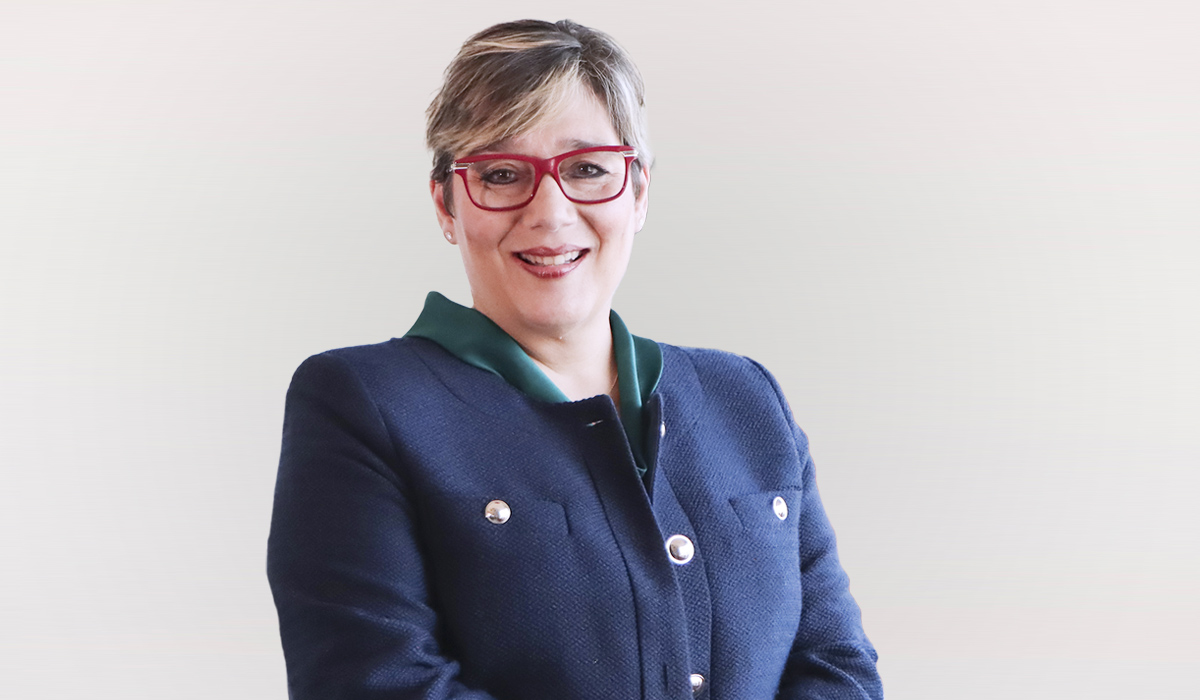
19 Feb Interview with Mrs. Walesca Esker Estherkel, Executive Director of AmCham Guatemala
With flagship national infrastructure projects such as the modernization of Puerto Quetzal, major highway projects and new upgrades to the electricity grid, how do these projects signal a new boost in infrastructure cooperation between the United States and Guatemala.
We are truly very pleased with this surge in infrastructure development that we are going to see in Guatemala, with cooperation from the United States government. More than the infrastructure projects themselves, I believe that the message of investment and cooperation from the U.S. in Guatemala is extremely important in order to attract U.S. companies to invest in our country.
If the U.S. is open to engaging in this type of infrastructure cooperation — such as at Puerto Quetzal through the U.S. Army Corps of Engineers — and given that a new strategic road infrastructure agreement with the United States was recently signed, as well as a railway agreement from Escuintla to Puerto Quetzal, then these projects, all strategically oriented toward logistics and positioned within international trade, will be very important.
Obviously, the cooperation itself is important. However, the message that the U.S. sends through these cooperations and investments, in my view, is key for investors to take notice and consider Guatemala as a location for nearshoring or friendshoring, within this new policy of President Trump: America First, but not alone.
How important do you consider Guatemala to be as a trading partner for the U.S. and vice versa and what impact bilateral trade has on the Guatemalan economy.
The U.S.is our main trading partner. We signed a free trade agreement known as DR-CAFTA and there is the recent announcement related to tariffs under President Trump’s administration, which began in April of last year. I believe this opens new opportunities for countries like Guatemala, which once again is very closely aligned with the U.S. in terms of policies and the initiatives that the U.S. is promoting.
Guatemala was one of the first countries to reach a trade agreement with the U.S. under which more than 70 percent of our products return at zero tariff. This has already been announced. We are only pending the formal signing of the agreement between governments. The Government of Guatemala has done an excellent job in negotiations with the Government of the United States and, as a result of all this, there is also significant cooperation coming to the country in other areas, which we are already seeing, for example, in infrastructure.
What does Guatemala export the most? Fruits and vegetables and the apparel and textile sector is also very important in garment manufacturing, where there are opportunities to attract investment from Asia to Guatemala, allowing the country to supply the U.S. market.
How proud are you of Guatemala for having been selected by the Millennium Challenge Corporation (MCC) to address constraints on private sector–led economic growth and what is the expected impact of this program on the ground?
It is truly a privilege to be part of this program. Guatemala has participated before and at that time significant progress was made on an agenda of digitalization and modernization of the tax administration. We now hope to once again count on the support of this corporation in areas such as innovation, digitalization and trade facilitation, which will be extremely useful for both Guatemalan and U.S. businesspeople, allowing them to conduct business more efficiently and to remove structural obstacles, always led by the private sector.
This program not only provides resources once again, but also technical standards, institutional best practices and a comprehensive vision for development that we are confident will strengthen the investment ecosystem.
What incentives is the Government of Guatemala offering to attract more investment from the U.S. and in which areas are there greater opportunities?
Guatemala has economic development zones known as ZDEEPs. These zones have been developed over recent years and offer tax incentives, primarily aimed at foreign direct investment. We also still have Decree 29-89 in force, which is a program mainly oriented toward the apparel and textile sector, although not exclusively limited to it. Likewise, these are tax incentives and in addition, we have export incentives.
We also have the Authorized Economic Operator program in customs matters, which facilitates exports and imports. Companies that pass this program become trusted exporters or importers for the country and this also supports this effort.
Looking ahead to 2026, we also see important laws that have been approved, such as the public-private partnership law, which will generate further investment in infrastructure. There is also work underway — although it has not yet been finalized — on a new investment law, which has not yet been passed, but there is significant progress in streamlining procedures that will benefit investors.
And the message is truly clear: investing in Guatemala today means investing in a country that combines a strategic location, talent and a pro-competitiveness agenda. This is important because there is also a very close relationship between Guatemala and the world’s largest market, which is the United States.
Can you give a brief description of AmCham’s role and importance in Guatemala and what its main milestones have been to date.
The truth is that AmCham Guatemala has been in the country for 58 years. We are part of the U.S. Chamber of Commerce, which is the largest chamber in the world, with more than 3,000,000 members and a network of 22 AmChams throughout Latin America and the Caribbean.
Virtual work has made our job much easier, because in the past we used to meet three times a year. One of those meetings was in Miami, another in Washington, D.C. and another in one of the countries in Latin America. Now we meet virtually every month and as a result we share best practices, compare notes among countries and see what is happening and what is not.
AmCham Guatemala is the most important binational chamber in the country, with around 500 member companies. Our slogan is truly “Your concierge for business”: we offer everything U.S. companies need to establish themselves in Guatemala, or everything Guatemalan companies need to establish themselves in the United States. We provide support through a team that truly makes all the magic happen here, made up of 20 people and we work through committees.
We have 10 committees, including the Investment and Foreign Trade Committee and the Sustainability Committee. These committees operate with our own members, identifying key issues of interest and determining where we need to act as that business concierge in order to engage with government authorities — whether U.S. or Guatemalan — and make things happen.
One of AmCham’s main achievements in 2025 was supporting the government and other business chambers through a public-private effort on the issue of U.S. tariffs and the DR-CAFTA. This made it possible not only to ensure that 70 percent of products remained at zero tariffs, but also to assume commitments with the United States, including an agenda for the digitalization of procedures that will facilitate foreign trade for both foreign and Guatemalan companies.
Together with the Ministry of Economy, we also achieved something historic: the refund of the tax credit and the approval of a new law that will favor investment, both for investors already established in Guatemala and for those who will come in the future. This law ensures that amounts withheld for taxes — such as those related to credit card transactions — are automatically refunded. That money is extremely important to be able to reinvest it in the country and generate more employment.
Naturally, we have also pushed a legislative agenda focused on attracting investment and improving competitiveness, where we have achieved milestones such as the competition law, which was passed last year, in 2025; the public-private partnership law I just mentioned; and the tax credit refund law. In addition, we are working on other laws this year that will be of great importance within this investment-attraction agenda for the country..
I am deeply passionate about my country. I love Guatemala and I know the potential that Guatemala has. Through the position I have been given, I would like everyone to be able to see, through my eyes, what I see: what this country could become, reaching its maximum potential with just a few changes.
Many things sometimes depend on political will. Guatemala is a country that truly has sufficient resources, including to invest in its people. There is a lot of work to be done and I would like to be part of that, particularly in the development of human talent. I believe it is vital to be involved in that area in order to help our country grow even more.
What would be your final message to readers of this report in both editions, the Miami Herald and El Nuevo Herald, in Spanish?
I believe the key message is to take advantage of this country — to take advantage of its geographic positioning, its people and the natural resources that Guatemala has, as well as the timing, which I believe is ideal. With this new policy of President Trump, which is very business-oriented, we can truly make progress in attracting foreign investment to the country, having it establish operations here and generate employment for Guatemalans in their own country.
As AmCham, we are at your service as that concierge for business. We are truly here to support anything that is necessary to help close those deals. It is important for investors to feel comfortable when they come and have their first interaction with the country. I believe that reaching out to the Guatemalan American Chamber has tremendous value, because there are companies here that can genuinely say that Guatemala is their main market in Latin America. It is a fairly important market in terms of consumption and a country that, in my view, at this moment has its arms open to receive that investment.
Sorry, the comment form is closed at this time.